 how-to
How to Start Your Fitness Journey as a Beginner
Table of Contents
- Assess Your Starting Point and Set Realistic Fitness Goals
- Your First Month: A Beginner Workout Routine That Actually Sticks
- How to Start Strength Training as a Beginner
- How Often Should Beginners Work Out
- Fueling Your Workouts: What to Eat Before a Workout
- Recovery, Rest Days, and Staying Consistent
- Common Beginner Mistakes and How to Avoid Them
- Measuring Progress Beyond the Scale
- Frequently Asked Questions
Last Updated: October 16, 2026
Assess Your Starting Point and Set Realistic Fitness Goals
Your fitness journey beginner phase requires honest self-assessment before you pick a single exercise. Many people jump straight to workouts without understanding where they're starting from, which leads to frustration and quitting.
Begin by asking yourself three questions: What's your current activity level? Do you have any injuries or health conditions? What does success actually look like for you in three months?
Your starting point determines everything. If you've been sedentary for years, your first month looks completely different than someone returning to fitness after a break. That's not weakness, it's reality. Honesty here prevents injury and keeps you motivated.
Set goals that are specific and measurable. "Get fit" is too vague. "Walk for 20 minutes without stopping" or "do 10 push-ups with proper form" gives you something real to track. Goals should challenge you but feel achievable within 4-6 weeks. If your goal feels impossible, scale it back. A smaller win builds momentum faster than a big goal you abandon.
Your First Month: A Beginner Workout Routine That Actually Sticks
Your first month of a fitness journey as a beginner determines whether this becomes a habit or another failed attempt. The goal isn't intensity, it's consistency. Most beginners fail because they do too much too fast, burn out, and quit by week three.
This four-week plan balances building the habit with introducing your body to physical activity. You'll work out three days per week with rest days between sessions. Each workout takes 20-30 minutes. That's short enough to fit into a busy schedule but long enough to create real change.
Week 1-2: Building the Habit
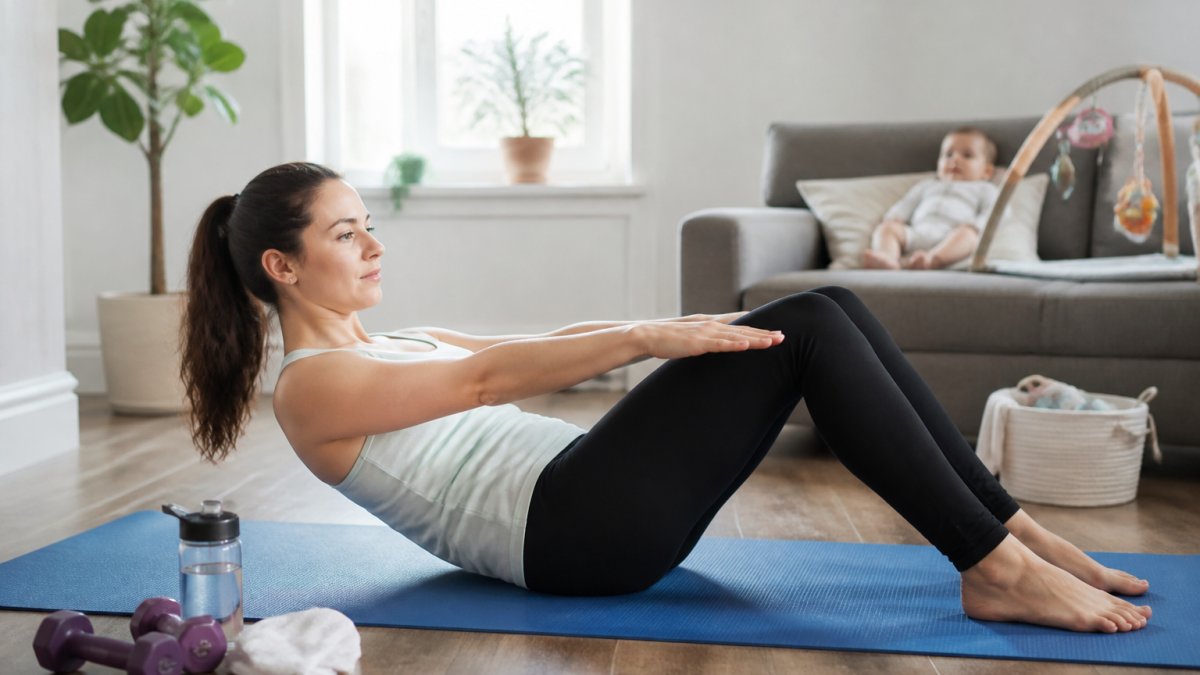
Your first two weeks establish routine. Skip the heavy lifting and complex movements. Focus on moving your body and learning proper form.
Pick three non-consecutive days each week. Monday, Wednesday, Friday works well. Your body needs rest days to adapt and recover between sessions.
Here's your Week 1-2 routine:
- Warm-up (5 minutes): Walk slowly or march in place, then do 10 arm circles and 10 leg swings each side
- Main workout (15 minutes): Do each exercise for 45 seconds, rest 15 seconds, then move to the next one. Complete two rounds:
- Bodyweight squats
- Push-ups (on knees if needed)
- Walking lunges
- Plank hold
- Glute bridges
- Cool down (5 minutes): Walk slowly and stretch your legs, chest, and shoulders
Don't worry about doing these perfectly. Focus on completing the workout. Proper form matters, but showing up matters more right now.
Week 3-4: Increasing Intensity
By week three, your body has adapted to movement. Your muscles know what they're supposed to do. Now you can push a little harder.
Keep the same three-day schedule. Add one of these changes each week:
Week 3 changes:
- Increase each exercise to 50 seconds of work, 10 seconds of rest
- Add one extra round (three rounds total instead of two)
- Do full push-ups instead of knee push-ups if you're ready
Week 4 changes:
- Increase to 55 seconds of work, 5 seconds of rest
- Add a fourth day of light activity (20-minute walk or yoga)
- Pick two exercises and add extra weight (dumbbells, resistance bands, or water bottles)
This gradual progression prevents injury and keeps your body adapting. You're not jumping from zero to hero, you're building momentum week by week.
How to Start Strength Training as a Beginner
Strength training is the most effective way to build muscle and boost metabolism, but beginners often approach it wrong. They either avoid it completely or jump into heavy lifting they're not ready for.
Start with bodyweight exercises. Your own body weight is enough resistance for the first month. Push-ups, squats, lunges, and planks teach your muscles how to work together.
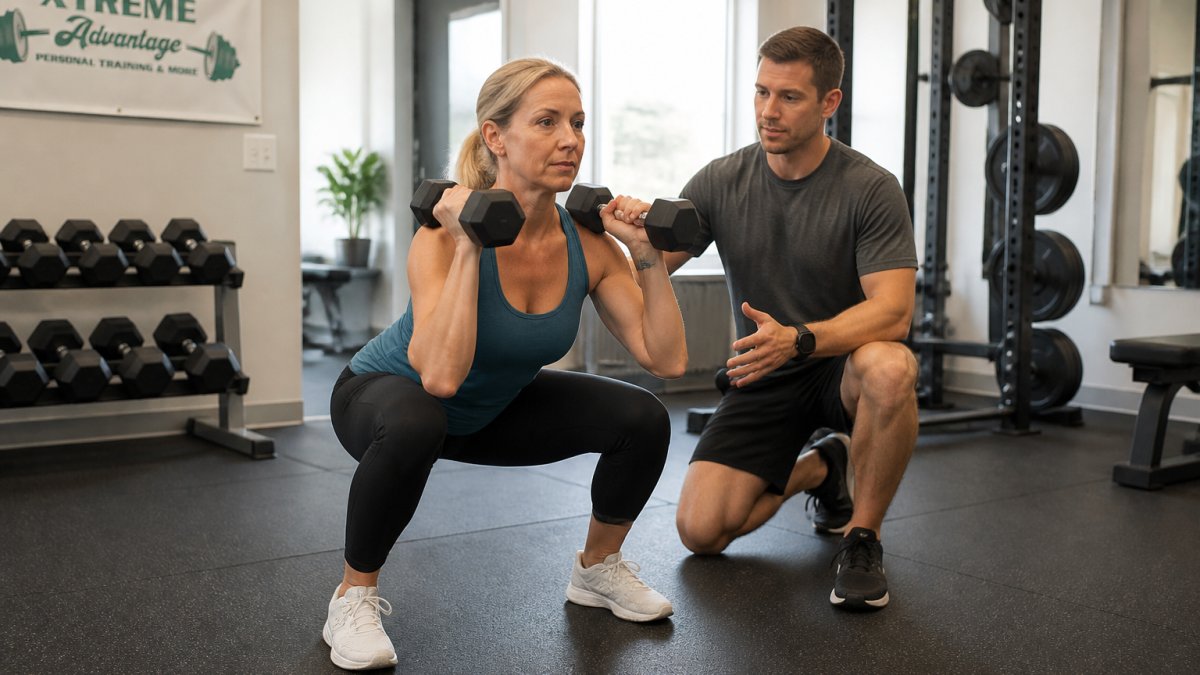
Focus on these fundamental movement patterns:
- Push: Push-ups, chest press
- Pull: Rows, assisted pull-ups
- Squat: Bodyweight squats, goblet squats
- Hinge: Glute bridges, deadlifts
- Carry: Walking with dumbbells in each hand
These five patterns cover every major muscle group. You don't need 20 different exercises. You need to master the basics.
For each exercise, aim for three sets of 10-12 repetitions. Rest 60-90 seconds between sets. If you can't do 10 reps with good form, the weight is too heavy. Drop down and try again.
One of the biggest mistakes people make is moving too fast and using momentum instead of muscle. Slow, controlled movements build real strength.
How Often Should Beginners Work Out
How often should beginners work out? Three times per week is the sweet spot for most people starting a fitness journey as a beginner. It's enough to create adaptation and progress, but not so much that recovery becomes impossible.
Here's why three days works:
- Progress: You're giving your body a stimulus three times per week
- Recovery: You have rest days between sessions for muscles to repair
- Sustainability: Three days fits into most schedules without overwhelming you
- Habit building: Consistency matters more than volume at the start
Some beginners think more is better. They try working out five or six days per week, burn out mentally, and quit. Others do too little, one day per week, and never build momentum.
If three days feels impossible due to schedule, do two days. Two consistent workouts beat five sporadic ones. Once you've built the habit for four weeks, consider adding a fourth day of light activity like walking or yoga.
Never do intense strength training on back-to-back days. Your muscles need 48 hours to recover. A Monday strength session, Wednesday strength session, and Friday strength session gives you the recovery you need.
Fueling Your Workouts: What to Eat Before a Workout
What to eat before a workout matters more than most beginners realize. You need fuel to perform, but you also don't want to feel heavy or sick during exercise.
Eat something 30-60 minutes before your workout. It should contain carbs and protein, but be easy to digest:
- Banana with peanut butter
- Greek yogurt with granola
- Apple with almond butter
- Toast with eggs
- Oatmeal with berries
Avoid heavy meals, fried foods, and excessive fiber right before working out. These sit in your stomach and make exercise uncomfortable.
Hydration matters just as much as food. Drink water throughout the day, not just before your workout. By the time you feel thirsty during exercise, you're already dehydrated. Aim for half your body weight in ounces of water daily. If you weigh 150 pounds, drink 75 ounces.
After your workout, eat within 30-60 minutes. Include protein and carbs to help muscles recover. A protein shake with fruit, a chicken sandwich, or Greek yogurt with granola all work well.
Recovery, Rest Days, and Staying Consistent
Recovery is where progress happens, not during the workout. Your muscles don't grow while you're exercising, they grow while you rest.
Rest days are non-negotiable. Take at least one full day off per week where you do no structured exercise. Your nervous system needs recovery just as much as your muscles do.
Sleep is your secret weapon. Most beginners underestimate how much sleep they need. Aim for 7-9 hours per night. Sleep is when your body releases growth hormone and repairs muscle damage from workouts.
Staying consistent is harder than doing one good workout. Life gets in the way. Work gets busy. You get sick. Motivation dips. This is normal.
Build consistency by removing friction. Lay out your workout clothes the night before. Schedule workouts like appointments.
Consider working with a trainer. Accountability changes everything. Xtreme Advantage Personal Training & More offers flexible virtual training and in-person small group training designed for beginners who need that accountability structure.
Common Beginner Mistakes and How to Avoid Them
Most beginners make the same mistakes. Knowing them in advance helps you avoid months of wasted effort.
Mistake 1: Doing too much too soon. You feel motivated, so you work out six days per week and do intense workouts.
Mistake 2: Ignoring form to lift heavier weight. Your ego wants to lift the heaviest dumbbell in the rack. But bad form builds bad habits and causes injury.
Mistake 3: Comparing yourself to others. You see someone doing advanced exercises and think you should do them too. You're not them. You're on your own timeline.
Mistake 4: Skipping warm-ups and cool-downs. These feel like wasted time, but they prevent injury and improve recovery.
Mistake 5: Eating nothing before workouts. You think fasting before exercise burns more fat. Actually, you're just weak and dizzy. Eat something light beforehand.
Mistake 6: Not tracking anything. You do workouts but never write them down. Weeks later, you can't remember if you're actually progressing.
Measuring Progress Beyond the Scale
The scale is a terrible way to measure progress during your fitness journey beginner phase. Muscle weighs more than fat. You could be getting stronger and leaner while the scale stays the same.
Measure progress in these ways instead:
| Progress Metric | How to Track | Why It Matters |
|---|---|---|
| Strength | How many push-ups or reps you can do | Shows muscle is building |
| Endurance | How long you can walk or exercise | Shows cardiovascular fitness improving |
| Clothes fit | Do your pants feel looser? | Shows body composition changing |
| Energy levels | Do you feel less tired during the day? | Shows metabolism and fitness improving |
| How you look | Take photos every two weeks | Visual changes appear before scale changes |
| How you feel | Mood, sleep quality, stress levels | Fitness improves mental health too |
Take progress photos every two weeks. Wear the same clothes and take them in the same lighting. You'll see changes in the photos before you feel them or see them on the scale.
Celebrate non-scale wins. Your first full push-up, walking for 30 minutes without stopping, or sleeping better at night, these are real victories. They matter more than a number on a scale.
Starting your fitness journey as a beginner is challenging, but it's absolutely doable when you have the right plan and support. The strategies here create real momentum in your first month. At Xtreme Advantage Personal Training & More, we specialize in helping beginners build lasting fitness habits through customized personal training, small group training, and flexible virtual options. Contact us now to discuss how we can support your fitness journey.
Frequently Asked Questions
What's the best way to start working out for beginners?
Begin with low-intensity movement 3 days per week, combining bodyweight exercises and light cardio. Start with 20-30 minute sessions and focus on building the habit first, not intensity. Proper form matters more than weight or speed. Consider working with a trainer who can correct your technique and keep you accountable, many beginners find this support makes the difference between starting and actually sticking with it.
How often should a beginner exercise per week?
Most beginners should aim for 3-4 days per week, with at least one rest day between workout days. This frequency allows your muscles to recover while building consistency. As you progress, you can increase to 4-5 days per week. The key is choosing a schedule you can actually maintain, missing workouts because you're burned out defeats the purpose. Consistency beats intensity for beginners.
What should I eat before exercising?
Eat a light snack 30-60 minutes before your workout: a banana with almond butter, Greek yogurt with berries, or whole-grain toast with honey. Avoid heavy meals right before exercise. Stay hydrated by drinking water throughout the day and 16-20 ounces about 2-3 hours before your session. If you exercise first thing in the morning, even a small snack like a banana can improve your energy and performance.
How can beginners stay consistent with a fitness routine?
Schedule workouts like appointments and prepare the night before. Track your workouts to see progress. Start with a realistic commitment you can keep, missing sessions early on kills motivation. Find a form of exercise you actually enjoy, whether that's strength training, cardio, or group classes. Having external accountability, like a trainer or workout partner, significantly increases follow-through, especially when you've tried and failed before.