 listicle
Best Personal Training for Busy Parents: Which Option Fits?
Quick Summary
The best personal training for busy parents is the format that still works when your schedule falls apart, not the one with the most features. For most parents that means one coached option, such as personal training, small group or virtual, plus a flexible backup like a short app workout for unpredictable weeks.
- Most parents quit because the schedule collapses, not because they lack motivation.
- Virtual training removes the commute and lets a coach correct your form in real time over Zoom.
- Xtreme Advantage offers personal training and caps small groups at three clients.
- Apps work best as a supplement to coaching, since they cannot catch form problems the way a trainer can.
- Pick three workouts in advance and repeat them for a month before adding variety.
Table of Contents
- How We Evaluated Personal Training Options for Parents
- Quick Comparison: Training Formats for Busy Parents
- Virtual Personal Training: Flexible Coaching From Home
- Small Group Training: Accountability Without the Waiting
- Workout Apps and Short Workouts for Busy Parents
- Which Option Fits Your Schedule and Budget
- Booking Your First Session: What to Expect
- Frequently Asked Questions
Why Busy Parents Struggle to Stick With Training
Most parents don't quit fitness because they lack motivation. They quit because the schedule collapses, and that is why the right personal training for busy parents has to survive a bad week, not just a good one. A missed nap, a sick kid, or a late meeting can wipe out a workout plan in a single afternoon. That is why the best personal training for busy parents is the option that fits real life, not the one with the most features.
Parents face three recurring obstacles: unpredictable time, low energy after long days, and the guilt that comes from skipping sessions. Each one makes it easy to abandon a plan that looked good on paper. The useful question is not "How do I find more time?" It is "Which format still works when my day falls apart?"
Watch out: plans that require a fixed weekly slot tend to fail first. If one missed session puts you a week behind, the format is too rigid for a parent's schedule.
How We Evaluated Personal Training Options for Parents
We judged each option on five practical criteria: scheduling flexibility, session length, accountability, the cost of missing a session, and how well it fits a home or travel-heavy routine. We also looked at whether a format offers real coaching, meaning someone checks form and adjusts the plan, or whether it only supplies workout videos.
Quick Comparison: Training Formats for Busy Parents
The table below summarizes how the main formats compare on the criteria above.
Format | Scheduling Flexibility | Coaching Level | Best For |
|---|---|---|---|
In-person personal training | Limited to set appointments | High, hands-on form checks | Parents who want full supervision |
Virtual personal training | High, live sessions from home | High, live verbal coaching | Parents with irregular hours or travel |
Small group training | Moderate, fixed class times | Moderate, shared attention | Parents who want accountability |
Workout apps | Very high, on-demand | Low to moderate | Parents with short, unpredictable windows |
Each format solves a different problem. Pick the one that matches the constraint you struggle with most.
Virtual Personal Training: Flexible Coaching From Home
Virtual training removes the commute, which is often the biggest hidden cost for parents. Live sessions over video let a coach watch your movement and correct it in real time. Xtreme Advantage offers live virtual training via Zoom with direct verbal interaction, and it requires 12 hours' notice for cancellations.
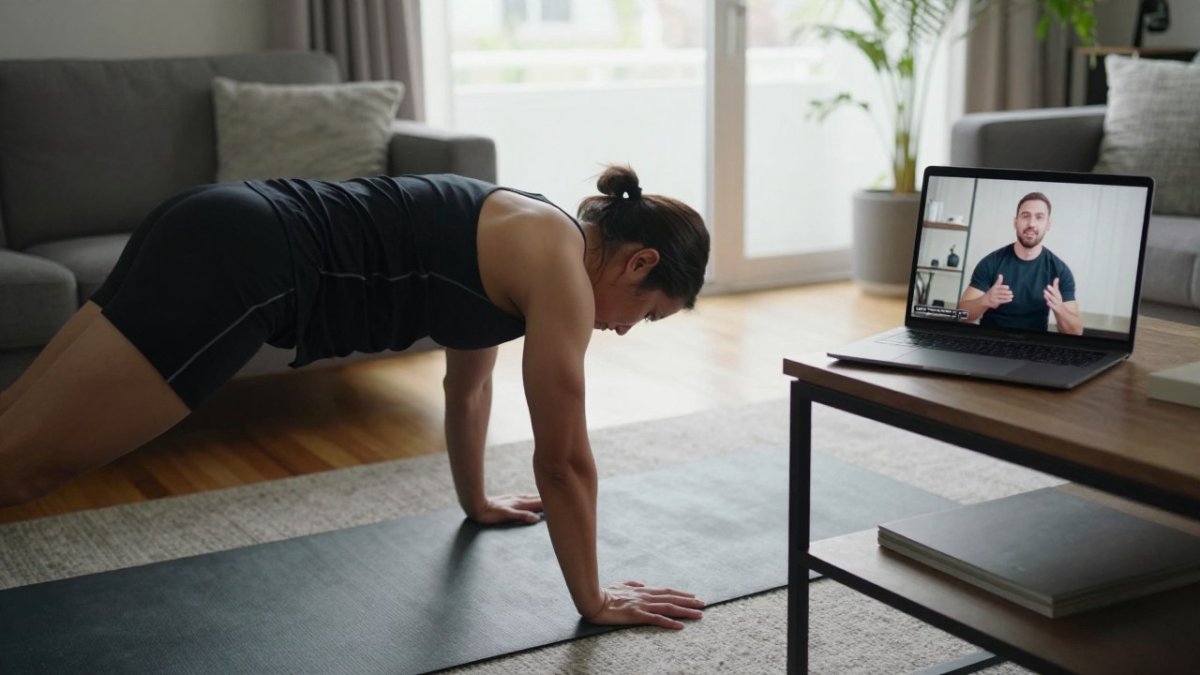
The main trade-off is that you must still carve out a protected block of time and have a space at home where you can move safely. A quick check: if you can clear a small area of floor for thirty minutes, virtual coaching is likely a strong fit. You can learn more about this option on our virtual training page.
Small Group Training: Accountability Without the Waiting
Small group sessions give you the structure of a class with more attention than a crowded gym offers. Xtreme Advantage caps small group training at three clients, each doing their individual programs, at their fitness level, which keeps coaching personal.
The downside is scheduling rigidity. A group session only helps if you can reliably attend it. If your week changes daily, pair group work with a more flexible option like our on demand Get Fit Boot Camp. This is a larger group workout that allow you to schedule your class at your convenience, requiring only a minimum of 12 hours' notice for booking.
Workout Apps and Short Workouts for Busy Parents
Apps are the most flexible option on the list, and they are also the easiest to misuse. The format works when you treat it as a tool for a specific job, a 15-minute strength session in the living room, a mobility reset after bedtime, a travel-day workout in a hotel room, rather than as a replacement for coaching. Parents who succeed with apps often pair them with some coached sessions so someone still checks form and adjusts the plan.
What a realistic short workout looks like
A useful short session for a parent is not a compressed version of a gym workout. It is a circuit built around movements that carry over to lifting children, carrying car seats, and getting off the floor. One common pattern is three rounds of five movements, 40 seconds on and 20 seconds off, for a total of about 15 minutes:
- A squat pattern (bodyweight squat, goblet squat with a household object, or sit-to-stand from a chair)
- A hinge pattern (hip bridge, or a light kettlebell or dumbbell deadlift if you have one)
- A push (push-up from the knees, incline push-up on a couch, or floor press with dumbbells)
- A pull (a row with a resistance band anchored to a door, or a towel row)
- A carry or core movement (a suitcase carry across the room, or a dead bug)
That structure fits into a nap, a lunch break, or the ten minutes before a school pickup. It also scales: add a round when you have 20 minutes, drop to two rounds when you have 10.
Equipment-minimalist setup you can start today
You do not need a home gym to begin. A basic starter kit that covers the circuit above can be assembled for a modest budget and fits in a closet. Equipment prices vary by retailer and brand, so check current rates before buying.
If you want to spend nothing, bodyweight-only versions of every movement above are effective for beginners. The limitation is progression: at some point you need load to keep getting stronger, which is where a single kettlebell or a band earns its place.
How the major apps compare for parents
Pricing for these apps changes frequently; check current rates before subscribing. None of them replaces live coaching for form correction.
Where apps fall short
Apps lack live coaching, so they work best as a supplement to a coached program or as a backup for short, unpredictable windows. Be honest about this limit: an app will not catch a form problem the way a trainer will, and it will not notice when a movement is aggravating an old injury. If you are returning to training after pregnancy or a long layoff, start with a coached option and use an app for the sessions in between.
Watch out: the most common failure mode with apps is decision fatigue, scrolling through a library for ten minutes and then skipping the workout. Pick three workouts in advance and repeat them for a month before adding variety.
Which Option Fits Your Schedule and Budget
Start with your constraint, not your preference. The format that fits is the one that survives your worst week, not your best one. Use the questions below in order.
Step 1: Identify your binding constraint
- If your hours change every week, choose virtual training, on demand training options or an app. A fixed appointment will be the first thing you cancel.
- If you need external accountability and have one reliable weekly slot, choose small group or 1on1 personal training. The social cost of missing, other people expecting you, is the mechanism that keeps attendance up.
- If childcare is the real barrier, compare formats that solve it directly: in-person sessions with on-site childcare, small group classes scheduled during school hours, or virtual sessions done at home while another adult is present.
- If you travel or work shifts, virtual training with recorded sessions or an app is the only format that travels with you.
Step 2: Compare the true cost, not the sticker price
The headline price per session can be misleading because each format carries hidden costs such as commute time, missed sessions, and childcare.
Contact the studio for current rates and ask about make-up policies and scheduling notice.
Step 3: Match the format to your budget tier
Our recommendation: most parents do best with one coached option plus one flexible backup. The coached option provides accountability and form correction; the backup covers the weeks when the schedule collapses.
Watch out: the most expensive mistake is paying for a format you cannot attend. Before committing to a package, run a 2-4 week trial if offered at the schedule you actually keep, not the one you hope to keep.
Booking Your First Session: What to Expect
Your first session typically starts with a conversation about your goals, your schedule, and any health concerns. If you have a condition such as high blood pressure, tell the coach before you begin, and ask your doctor whether exercise limits apply.
Xtreme Advantage serves clients from beginners to athletes and offers discounts for military, first responders, and seniors. To get started, use the New Client Special Offers page or contact the team directly. Ask about scheduling notice and session format before you commit.
Ready to find a plan that fits your week? Contact Xtreme Advantage Personal Training & More to talk through your goals and schedule.
Frequently Asked Questions
What is a good workout program for busy moms?
A good program for busy moms is short, structured and repeatable. Sessions of 20 to 30 minutes built around full-body movements such as squats, rows, push-ups and carries cover most of the basics in little time. Pick a fixed schedule, such as three sessions a week on set days, and keep a backup 15-minute version for days when plans fall apart. Consistency matters more than session length, so a plan you can actually complete beats a longer one you abandon after two weeks. A coach can help you set the progression so the workouts stay challenging as you get stronger.
Is virtual personal training effective for busy parents?
Virtual personal training can be effective for busy parents because it removes travel time and lets you train at home or during a break. Live sessions over video allow a trainer to watch your form, adjust exercises and keep you accountable, which is what separates coached training from a pre-recorded app. Effectiveness depends on the same factors as in-person training: a clear goal, a consistent schedule and progressive loads. Ask any provider how form is monitored during sessions before you commit. Xtreme Advantage offers live virtual training via Zoom with direct verbal interaction, which is the feature to look for.
How often should a busy parent work out with a personal trainer?
Most busy parents do well with two to three sessions a week with a trainer, supplemented by short workouts on their own on other days. Two sessions can cover strength work and conditioning, while one or two shorter independent workouts maintain momentum. Starting with two sessions keeps the commitment realistic and makes it easier to stick with the plan. Your trainer can adjust frequency based on your goals, recovery and schedule changes. Flexible scheduling with notice, such as the 12-hour notice Xtreme Advantage requires, helps when a child is sick or a work trip comes up.
What should parents look for when choosing a personal trainer?
Look for a trainer who asks about your schedule, health history and goals before designing anything, and who monitors form rather than only counting reps. Flexible booking, whether virtual, small group or in-person, matters more for parents than a long class schedule. Ask how sessions are structured, how progress is tracked and how the program adapts when you miss a week. Clear communication about cost and cancellation terms is also important. Contact the studio directly for current pricing, since rates depend on the package and format you choose.