 how-to
Fitness Training for High Blood Pressure: A Safe Plan
Quick Summary
Fitness training helps high blood pressure because regular movement lets arteries relax, and many people see readings drop with consistency. A safe plan combines brisk walking, light strength work and isometric holds, aiming for about 150 minutes of moderate activity weekly. Check with your doctor before starting, especially if you take blood pressure medication.
- Aim for about 150 minutes of moderate activity each week, split across most days.
- Start with 10 to 15 minutes of brisk walking and build up gradually.
- Hold isometric exercises like wall squats for 20 to 30 seconds, then rest.
- Take resting readings before exercise and wait 30 minutes after to record again.
- Stop and seek care for chest pain, severe shortness of breath, dizziness or fainting.
Table of Contents
- How Exercise Lowers Blood Pressure
- Fitness Training for High Blood Pressure: Building a Weekly Routine
- Strength Training With High Blood Pressure: Safe Starting Exercises
- Exercise for High Blood Pressure at Home: A Four-Week Progression
- Dangers of Exercising With High Blood Pressure and When to Stop
- Best Time to Exercise to Lower Blood Pressure and How to Track Readings
- Booking Your First Session With a Blood-Pressure-Aware Trainer
- Frequently Asked Questions
How Exercise Lowers Blood Pressure
Last Updated: November 6, 2026
Fitness training for high blood pressure works because regular movement helps your arteries relax. A common question is whether exercise can really bring numbers down? The answer is yes for many people, though results vary and a doctor should guide your plan.
Physical activity can lower systolic and diastolic readings over time (Physical Activity and Your Heart - Benefits). The effect builds with consistency, not one hard workout.
- Aerobic movement improves how well blood vessels widen
- Strength work supports healthy weight and muscle mass
- Consistent routines reduce stress, which can also lift readings
Ask your doctor before you start, especially if you take blood pressure medication.
Fitness Training for High Blood Pressure: Building a Weekly Routine
A good routine balances aerobic work, strength and gentle isometric holds. Keep each week simple enough that you can repeat it. Consistency matters more than intensity.
Aerobic Options: Brisk Walking, Cycling and Swimming
Brisk walking is a common starting point. It is low impact and easy to fit into a day. Stationary cycling and swimming work well too, especially for people with joint pain.
- Brisk walking: start with 10 minutes and build up
- Stationary cycling: steady pace, easy on the knees
- Swimming: full-body movement with little joint stress
Moderate Intensity and the 150-Minute Target
The widely cited guideline from the U.S. Department of Health and Human Services suggests about 150 minutes of moderate activity each week. Moderate means you can talk but not sing. Split the time across most days if that feels more manageable.
The weekly routine balances aerobic work, strength and isometric holds, with a few key targets to track.
Activity | Guideline | Note |
|---|---|---|
Moderate activity | About 150 minutes per week | Split across most days if easier |
Brisk walking | Start with 10 minutes | Low impact, easy to fit in |
Isometric holds | Hold 20 to 30 seconds | Rest, then repeat |
Stationary cycling | Steady pace | Easy on the knees |
Swimming | Full-body movement | Little joint stress |
Strength Training With High Blood Pressure: Safe Starting Exercises
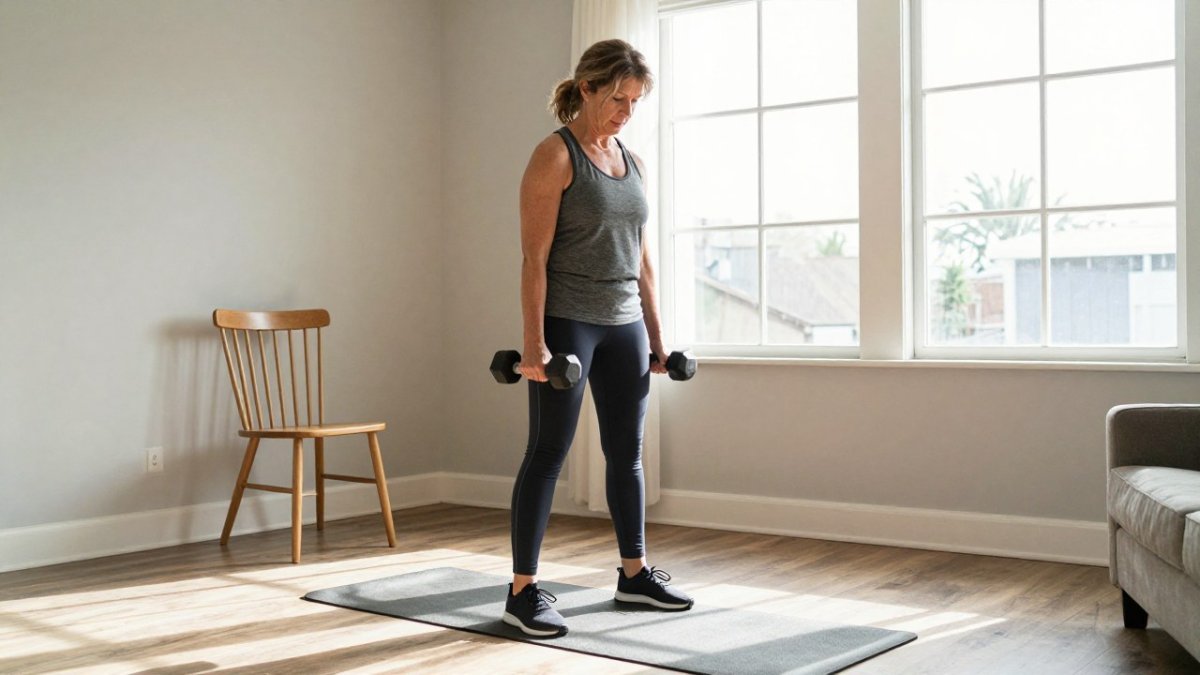
Strength training builds muscle and supports steady blood pressure over time. Start light and focus on form. Avoid heavy lifts that make you hold your breath.
Simple beginner moves include:
- Chair sit-to-stand
- Push-ups against a counter top or wall
- Light biceps curls with resistance bands
Isometric Exercises Such as Wall Squats and Planks
Isometric holds mean you contract a muscle without moving the joint. A wall squat or a short plank are common examples. Hold for 20 to 30 seconds, rest, and repeat. Breathe steadily throughout, since breath holding spikes pressure.
Exercise for High Blood Pressure at Home: A Four-Week Progression
Home training works when you add small steps each week and track what you do. Here is one simple path that assumes you are cleared by a doctor and starting from a low-activity baseline:

- Week 1: Walk 15 minutes daily at an easy pace. Take a resting blood pressure reading before your walk on three days and write it down.
- Week 2: Add two sets of wall squats and counter push-ups on two days. Keep the daily walk at 15 minutes.
- Week 3: Walk 25 minutes on most days, and add one 20-minute strength session with chair sit-to-stand and resistance band rows.
- Week 4: Reach about 30 minutes of walking on five days, plus two strength sessions and two short isometric sessions.
A common mistake is jumping to week four too quickly. Stay on a level until it feels comfortable, then move up. If a week feels hard, repeat it rather than pushing forward.
How to measure around workouts: Take a resting reading before exercise, seated for five minutes with your arm supported at heart level. After you cool down, wait at least 30 minutes before taking another reading, because exercise temporarily raises blood pressure. Record the numbers in a log with the date, time, and what you did. A single post-exercise reading is not a diagnosis; look at the trend over two to four weeks and share it with your doctor.
What to expect: Most people who stick with a routine see small changes over four to twelve weeks, not overnight. The immediate drop after a workout is temporary. The longer-term effect builds with consistency. If your readings are not moving after a month of regular training, that is a conversation for your doctor, not a reason to train harder.
When to stop and seek advice: Stop and seek medical care if you feel chest pain, severe shortness of breath, dizziness, fainting, or pain that spreads to your arm or jaw. If your resting reading is very high before a session, skip the workout and contact your doctor. If you take blood pressure medication, ask whether your workout timing should change, since some medications can affect how you feel during exercise.
!An adult in their 50s walking briskly outdoors on a quiet residential street in early morning light, wearing comfortable athletic clothes
Dangers of Exercising With High Blood Pressure and When to Stop
Many people with high blood pressure can exercise safely, but warning signs matter. Stop and seek medical care if you feel chest pain, severe shortness of breath, dizziness, fainting or pain that spreads to your arm or jaw. Those symptoms need prompt attention.
Learn more in our guide on Safe Exercise for Beginners With Health Conditions. Talk with a doctor before starting any new program.
Best Time to Exercise to Lower Blood Pressure and How to Track Readings
Many people find that daytime or early evening sessions feel easiest. The best time is the one you can keep. Check your blood pressure at rest before exercise, then again after you cool down. Write the numbers in a log so you can share them with your doctor.
Booking Your First Session With a Blood-Pressure-Aware Trainer
If you want guidance, our personal training program offers structured sessions. Prefer working out at home? Explore our virtual training options. When you are ready to begin, contact us and tell us about your health history so we can plan safely.
Frequently Asked Questions
What is the best workout for high blood pressure?
For most adults, the best starting workout is regular moderate aerobic activity such as brisk walking, cycling or swimming, aiming for about 150 minutes per week spread across most days. Adding two days of strength training and some isometric holds such as wall squats or planks builds a well-rounded routine. Because blood pressure responds differently to each person, check with your doctor before starting, especially if your readings are very high or you take medication.
Can I exercise if my blood pressure is 150/90?
Many people with readings around 150/90 can exercise, but the right approach depends on your overall health, medications and symptoms. Talk with your doctor before beginning a new program, and ask for a clear upper limit on blood pressure for safe exercise. Start with light to moderate activity such as walking, and avoid heavy lifting or breath-holding until you have medical clearance. If you feel chest pain, severe headache, dizziness or shortness of breath during exercise, stop and seek medical advice promptly.
What exercises should you avoid with high blood pressure?
Avoid maximal-effort lifts, heavy straining and breath-holding during lifts, because these movements cause sharp spikes in blood pressure. Be cautious with inverted poses and exercises that compress the chest for long periods. Start with lighter weights and higher repetitions, exhale during the effort phase, and keep your breathing steady. Any exercise that causes chest pain, severe breathlessness or dizziness should be stopped, and a qualified professional should review your program.
Can I exercise while taking high blood pressure medication?
Yes, most people taking blood pressure medication can exercise, but some medications affect heart rate and how you respond to exertion. Tell your doctor which medications you take and ask whether any timing or intensity limits apply. Staying hydrated and rising slowly from the floor or a chair can reduce dizziness, which some blood pressure medications can cause. Confirm your plan with your prescriber before making significant changes to your activity level.