 how-to
How Do I Start a Fitness Journey at Home?
Last Updated: November 11, 2026
Quick Summary
Start your fitness journey at home by choosing three short, easy sessions a week for eight weeks, using bodyweight moves like chair squats, wall push-ups, and glute bridges. Begin below your ability, rest a full day between sessions, and add one small change each week as your body adapts.
- Aim for three 20-minute workouts each week for the first four weeks.
- Start with 1 to 2 sets of 8 to 10 reps and stop before your form breaks down.
- Slow the lowering phase of each rep to about three seconds from week three onward.
- Change only one variable at a time, such as sets, reps, or a harder variation.
- Track consistency, good-form reps, and perceived effort rather than relying on the scale.
Table of Contents
- Why Starting at Home Works for Beginners
- Setting Realistic Goals for Your First Eight Weeks
- How to Start Exercising When You're Out of Shape
- How to Start Your Fitness Journey at Home Without Equipment
- A Beginner Home Workout Plan, Week by Week
- How Often Should Beginners Work Out?
- Tracking Progress, Pain Signals, and When to See a Professional
- Schedule Your First Home Workout This Week
- Frequently Asked Questions
Why Starting at Home Works for Beginners
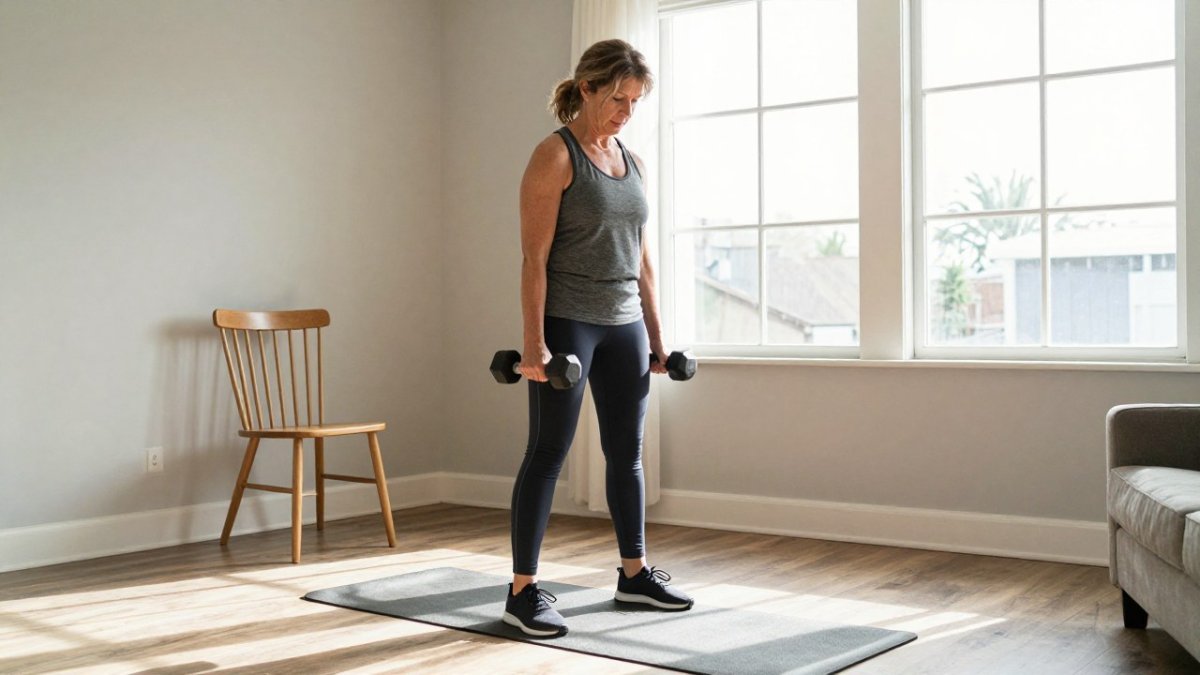
Starting a fitness journey at home is one of the simplest ways to begin, and it works well for most adults who feel unsure about a gym. You need no membership, no commute, and no one watching your first push-up. Many beginners find that the lower pressure helps them stick with exercise long enough to see changes. The fitness journey at home approach gives you room to learn at your own pace.
Home workouts also remove many common barriers. You can train before work, during a lunch break, or after the kids are asleep. Bodyweight movements like squats, wall push-ups, and glute bridges need little or no equipment. A clear beginner plan matters more than fancy gear.
Here is why many beginners choose home first:
- No travel time. Your workout starts the moment you decide to begin.
- Lower intimidation. Nobody is judging your form or your starting weight.
- Flexible timing. Short sessions fit around a busy schedule.
- Low cost to start. A mat and some open floor are often enough.
Starting at home is not a shortcut, though. Consistency still decides results. The good news is that a few focused sessions each week can build real strength and endurance.
Setting Realistic Goals for Your First Eight Weeks
Your first goal should be small, clear, and measurable. Aim to finish three short sessions a week for eight weeks. That target is far more useful than a vague wish to "get in shape."
Good early goals look like this:
- Complete three 20-minute workouts each week for four weeks.
- Hold a plank for 20 seconds by week six.
- Walk 10 minutes a day on rest days.
- Do five wall push-ups without stopping.
Write your goals down and check them each Sunday. Small wins build momentum. Many people who start too big burn out within two weeks, so keep the first targets easy to hit.
How to Start Exercising When You're Out of Shape
Being out of shape is the most common reason people wait too long to begin. The fix is to start below your ability, not above it. A safe first session may feel almost too easy, and that is the point.
Follow these steps for your first week:
- Warm up for five minutes. March in place, swing your arms, and roll your shoulders.
- Pick three easy moves. Try chair sit-to-stands, wall push-ups, and standing marches.
- Do 1 to 2 sets of 8 to 10 reps. Stop before your form breaks down.
- Cool down with gentle stretches. Hold each stretch for 20 to 30 seconds.
Rest one full day between sessions. Soreness that lasts a day or two is normal, but sharp pain is not. If your body needs more recovery, take it. Adding one repetition a week is a safer pace than doubling your workload.
How to Start Your Fitness Journey at Home Without Equipment
You do not need dumbbells or machines to build strength at home. Your body weight provides plenty of resistance when you control the movement. Slow reps, pauses, and smaller ranges of motion can make simple moves much harder.
Try this basic no-equipment circuit:
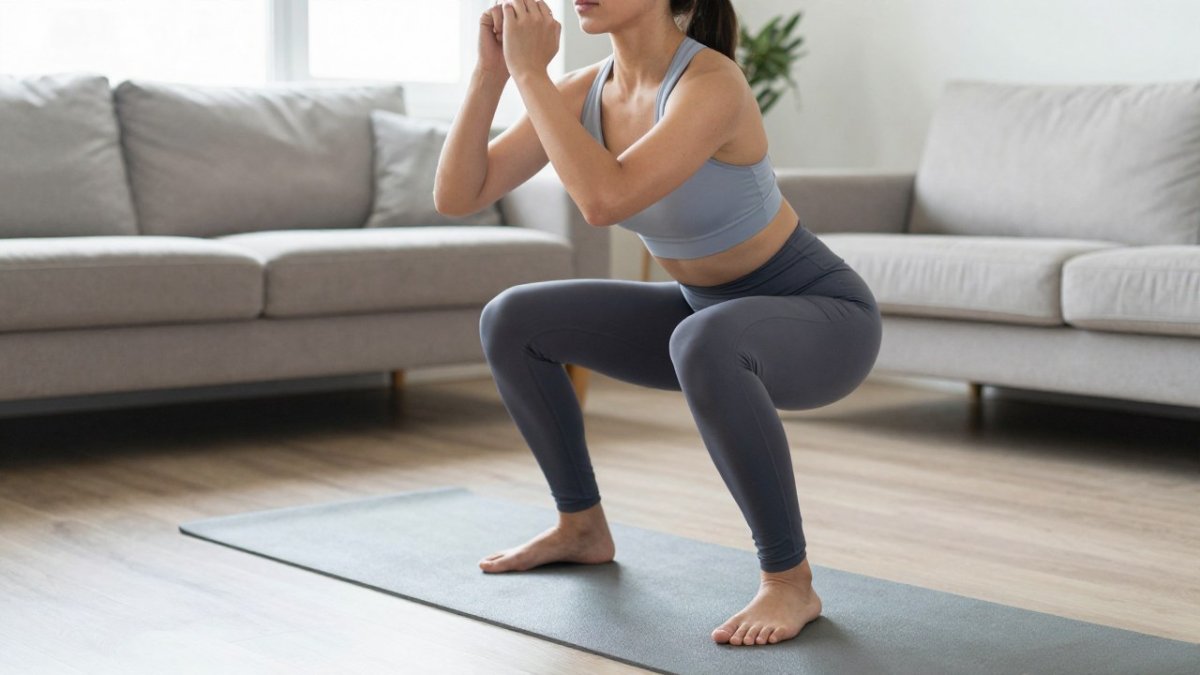
- Squats to a chair or box
- Wall or incline push-ups
- Glute bridges on the floor
- Standing or kneeling rows using a towel looped around a sturdy doorknob
- Dead bugs for core control
Use a towel or a sturdy backpack filled with books if you want more resistance later. Household items work well for progression, and they cost nothing.
A Beginner Home Workout Plan, Week by Week
A structured plan helps you know what to do each day and removes the daily decision of whether to train. The eight-week schedule below builds gradually, alternates workout and rest days, and tells you exactly when to add difficulty.
| Week | Sessions per Week | Session Length | Focus | Progression Rule |
|---|---|---|---|---|
| 1 | 3 | 15 minutes | Learn the basic moves | 2 sets of 8 reps per move |
| 2 | 3 | 20 minutes | Add one set to each move | 3 sets of 8 reps per move |
| 3 | 3 | 20 to 25 minutes | Slow down your reps | 3 sets of 8 reps, 3 seconds down |
| 4 | 3 to 4 | 25 minutes | Add a short cardio finisher | 3 sets of 10 reps plus 5 minutes of marching |
| 5 | 3 to 4 | 25 to 30 minutes | Add a harder variation | Swap one move for its harder version |
| 6 | 3 to 4 | 30 minutes | Build work capacity | 3 sets of 12 reps plus 8 minutes of cardio |
| 7 | 4 | 30 minutes | Consolidate and add a fourth day | 4 sets of 10 reps on two moves |
| 8 | 4 | 30 minutes | Test and reset | Retest week-one numbers, then repeat the cycle |
A sample week-one session looks like this:
- Warm-up: 5 minutes of marching and arm circles
- Chair squats: 2 sets of 8
- Wall push-ups: 2 sets of 8
- Glute bridges: 2 sets of 10
- Cool-down: 5 minutes of stretching
Repeat this session three times in week one, resting at least one full day between sessions. In week two, add a third set to each move. From week three onward, slow the lowering phase of each repetition to about three seconds; that single change makes bodyweight moves noticeably harder without adding equipment. In week four, finish with five minutes of marching or step-ups.
Watch out: Do not add sets, reps, and a harder variation in the same week. Change one variable at a time, or you will not know what caused the soreness or the progress.
If you miss a session, do not double up the next day. Resume at the next scheduled session and keep the week's structure intact. If you miss a full week, restart at the previous week's volume for one session before moving forward. This approach keeps a missed workout from turning into an abandoned plan.
Adapt the plan to your space and schedule. A 6-by-6-foot clear area is enough for every move listed. If you only have 15 minutes, run the warm-up, two moves, and the cool-down; short consistent sessions beat long sporadic ones.
How Often Should Beginners Work Out?
Most beginners do well with three sessions a week, with rest days between them. This frequency is enough to build a habit and see early progress without overwhelming your body. Federal physical activity guidelines recommend a combination of moderate aerobic activity and muscle-strengthening work each week for adults. Check the official guidance at health.gov for current recommendations.
If you feel fine, you can add a fourth day in week four. If you feel run down, drop back to two sessions. Watch your energy, sleep, and mood, not just the calendar.
Tracking Progress, Pain Signals, and When to See a Professional
Weight on the scale is only one measure of progress, and for beginners it is often the noisiest. Track a small set of signals that respond within weeks and that you can record without special equipment.
Keep a simple log with four columns: date, session completed (yes or no), reps or time completed with good form, and perceived effort on a 1-to-10 scale. Once a week, add two more notes: how many days you walked for at least 10 minutes, and how your sleep and energy felt. A common pattern is that consistency and rep counts rise before the scale moves, which is why the log matters more than the mirror in the first month.
Use these markers to judge progress:
- Consistency: Did you complete the planned sessions this week? Three out of three is the target; two out of three still counts as a win.
- Repetitions with good form: Can you do more chair squats or wall push-ups than in week one without your form breaking down?
- Walking duration: Can you walk or climb stairs longer before getting winded?
- Perceived effort: Does the same session feel easier than it did two weeks ago? A drop from 7 to 5 on the effort scale is real progress.
- Recovery: How quickly does your heart rate settle after exercise, and how sore are you the next day?
Know the difference between normal effort and a warning sign. Muscle burn during a set and mild soreness that fades within 48 hours are normal. Sharp or stabbing pain, joint pain that worsens with movement, chest pressure, dizziness, or shortness of breath that does not settle with rest are not normal; stop the session and seek medical advice.
Watch out: Pushing through joint pain to finish a set is the most common way beginners turn a minor irritation into a multi-week setback.
People with heart problems, high blood pressure, diabetes, joint injuries, or other health conditions should speak with a doctor before starting a new program. Our affordable personal training options in Roseville outline what beginners can look into locally. If you want guidance that fits your body and schedule, virtual training can give you live feedback on your form from home.
Review your log every Sunday and make one change for the coming week: add a rep, add a set, or add a minute of walking. One change per week is enough to keep progress moving without risking burnout.
Schedule Your First Home Workout This Week
Your next step is simple. Pick three days this week, put each session on your calendar, and set a reminder 15 minutes before. Choose a time you can realistically keep, even if it is short.
After your first session, note how it felt and what you could do next time. Small notes keep you honest and show progress. When you are ready to build a steady routine, maintain a consistent workout schedule with clear habits that stick.
If you feel unsure about your starting point, or you have health concerns, start safely with a plan designed for your situation. Taking that first step at home is often the hardest part, and you have already started.
Frequently Asked Questions
How do I start my fitness journey at home?
Start with a short, specific goal you can measure over four to eight weeks, such as three 20-minute sessions per week. Pick a consistent time, clear a small space on the floor, and begin with bodyweight movements like squats, wall push-ups, glute bridges, and marching in place. Keep a simple log of what you completed and how you felt. Increase duration or repetitions slowly, usually by no more than about 10 percent per week. If you have a health condition, such as high blood pressure, check with a qualified healthcare professional before you begin.
Can I start working out at home without equipment?
Yes. Most beginner routines rely on bodyweight exercises, which use your own weight for resistance. Squats, lunges, push-ups against a wall or kitchen counter, planks, and step-ups build strength and endurance without any gear. Water bottles, a sturdy chair, or a stair step can add variety later. Focus on controlled form and full range of motion before adding difficulty. Equipment becomes useful only when you have outgrown bodyweight progressions and want to add load.
How often should a beginner work out at home?
Federal physical activity guidelines from the U.S. Department of Health and Human Services recommend a combination of moderate aerobic activity and muscle-strengthening work each week for adults; check health.gov for current figures. A beginner can build toward this gradually. Starting with three sessions of 20 to 30 minutes each week is a reasonable first step, with rest days in between so your body can recover. Increase frequency only when workouts feel manageable.
How do I start exercising when I'm out of shape?
Begin with movements that feel easy enough to repeat without strain, such as walking in place, seated marching, or standing calf raises. Use a conversational pace as a guide: you should be able to speak in full sentences. Rest between sets and stop if you feel dizziness, chest pain, or unusual shortness of breath. Expect soreness in the first week, but sharp or joint pain is a signal to stop and seek professional advice. Progress comes from consistency, not intensity, in the early weeks.