 how-to
Why Personal Training Is Worth It: 7 Real Benefits
Table of Contents
- Why Personal Training Is Worth It: The Core Value Proposition
- Benefits of a Personal Trainer: What You Actually Gain
- Personal Trainer for Beginners: Starting Without Fear
- How Often to See a Personal Trainer: Finding Your Frequency
- Personal Training Cost: Is It Worth the Investment?
- When Personal Training May Not Be Right for You
- Alternatives and Hybrid Approaches
- Frequently Asked Questions
Last Updated: October 18, 2026
Why Personal Training Is Worth It: The Core Value Proposition
Personal training is worth it because it combines three things most people can't achieve alone: a customized plan built specifically for your body and goals, expert instruction to keep you safe and effective, and consistent accountability that actually sticks. We work with clients who've tried everything, gym memberships that go unused, workout apps they quit after two weeks, generic routines that don't fit their life.
Understanding why personal training is worth it starts with knowing the real question isn't whether personal training works. It's whether the investment makes sense for your situation right now. That depends on what you're trying to achieve, how much support you actually need, and what you're willing to spend. We'll walk through all of that below.
Benefits of a Personal Trainer: What You Actually Gain
Personal trainers deliver four concrete benefits that separate people who transform from people who try.
Customized workout plans tailored to your fitness level
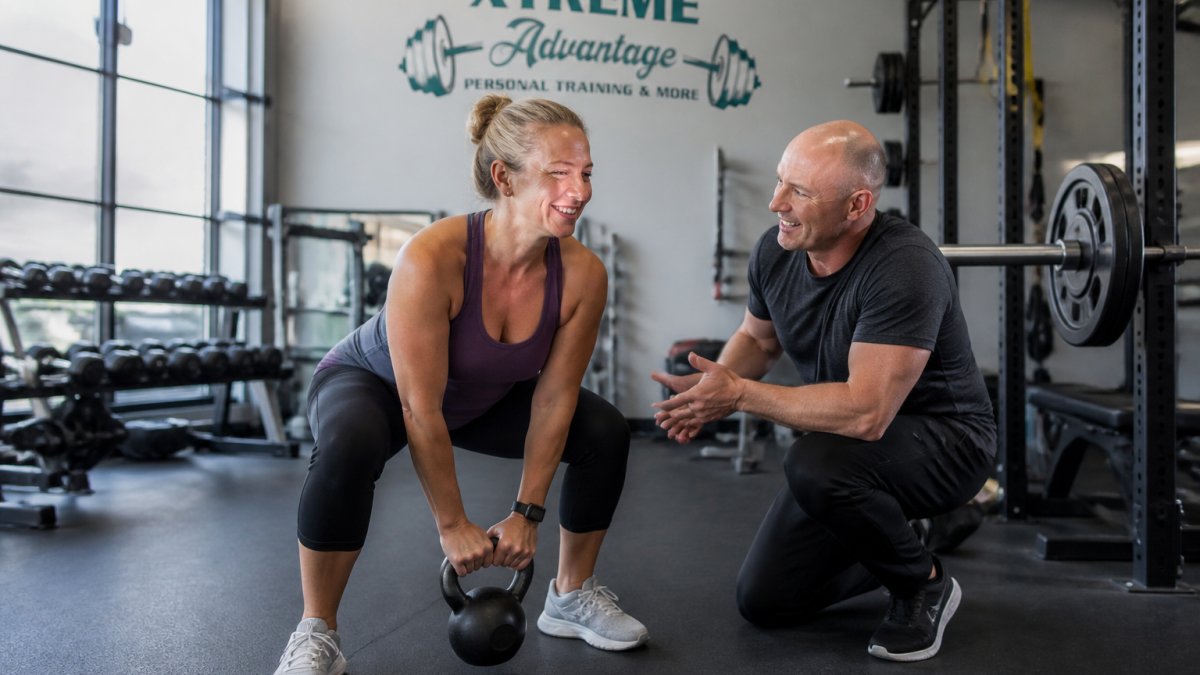
A trainer builds a program around YOUR body, not a template. If you have a bad knee, they modify every leg exercise. If you travel for work, they create routines you can do in a hotel room. If you've never lifted before, they start with movement patterns that feel safe, not movements that terrify you.
This matters because generic programs fail most people. They're written for an average person who doesn't exist. You're not average, you have specific limitations, specific goals, and a specific life. A trainer designs around that reality.
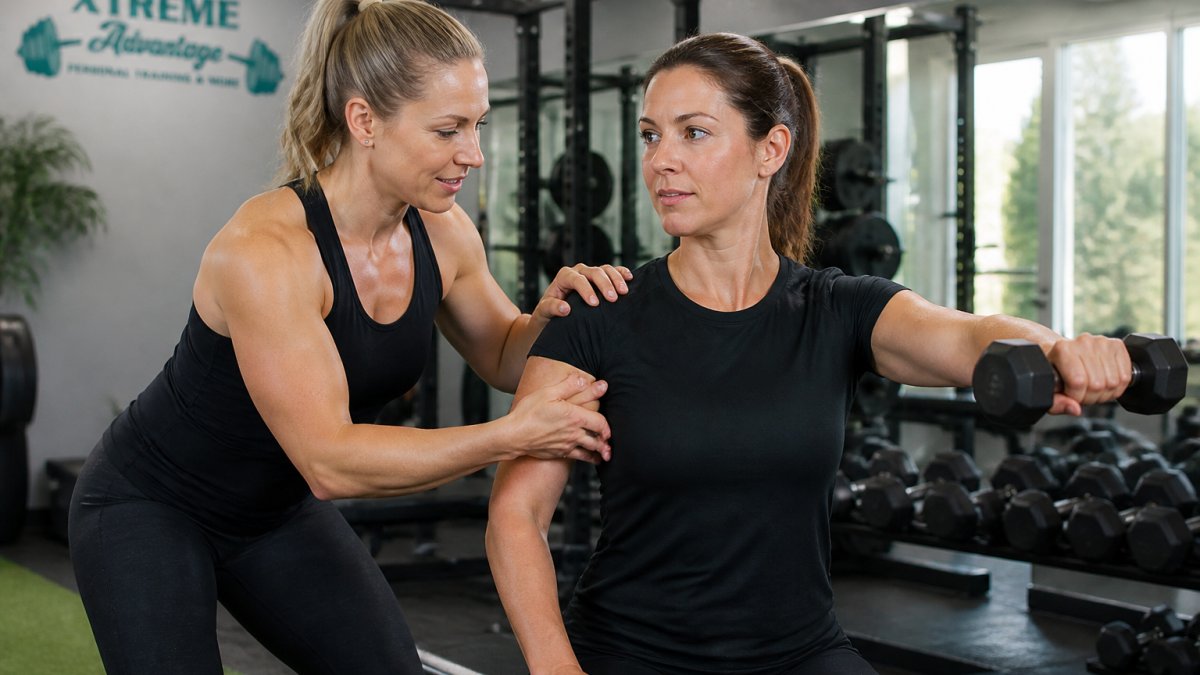
Expert guidance on exercise form and injury prevention
Doing an exercise wrong doesn't just waste your time. It can build bad habits that hurt you later. Many people round their spine on deadlifts, cave their knees inward on squats, or lock their joints under load. These mistakes feel normal because they're what your body naturally does. A trainer catches them in real time and fixes them before they become injuries.
Proper form also means you actually work the muscles you're trying to train. A bicep curl done wrong becomes a back exercise. A squat done wrong becomes a knee problem. Form is the difference between a workout that works and one that just makes you tired.
Accountability and motivation that stick
Motivation fades. Every person who's ever bought a gym membership knows this. You're fired up on January 1st. By February, you've got reasons not to go. A trainer removes the decision-making. You have an appointment. You show up. That consistency is what builds real change.
But accountability goes deeper than just showing up. A trainer tracks your progress week to week. They see when you're slowing down and push you harder. They see when you're pushing too hard and dial it back. They adjust based on what's actually happening, not what you planned.
Personal Trainer for Beginners: Starting Without Fear
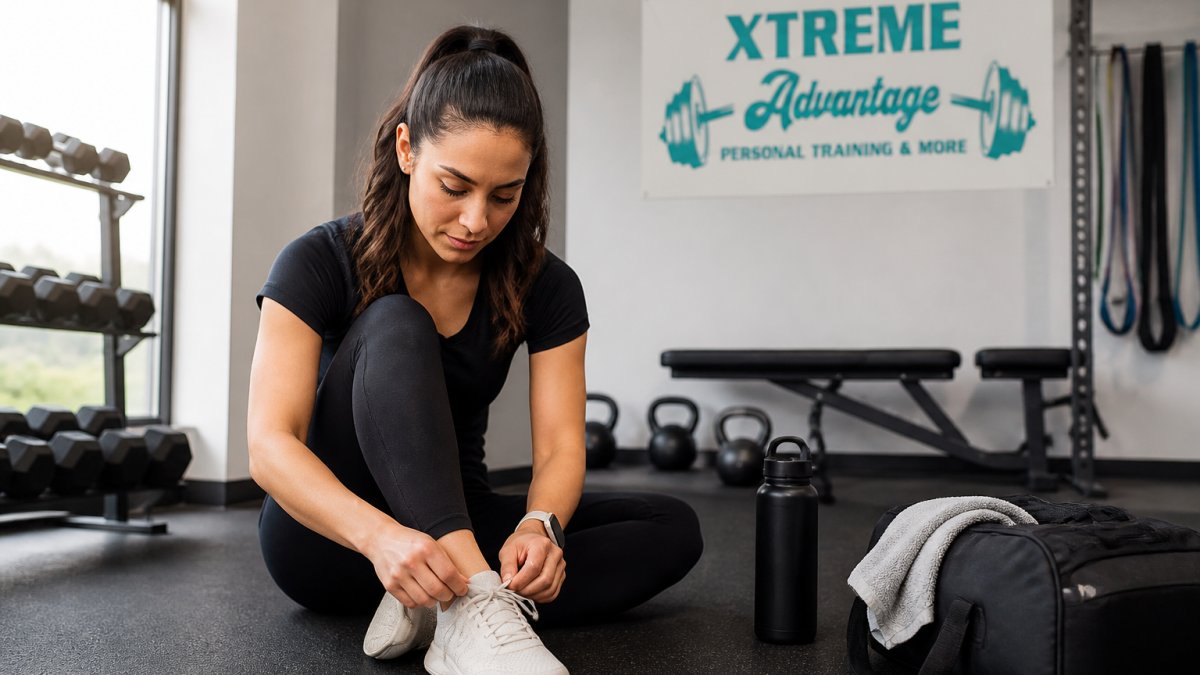
The biggest barrier to starting isn't fitness. It's intimidation. Many beginners feel completely out of place in a gym. Everyone else seems to know what they're doing. The machines are confusing. You don't want to look lost.
A personal trainer removes all of that. You're not in the gym alone trying to figure things out. You have someone there teaching you how everything works, showing you where to stand, how to grip the bar, when to breathe.
This is especially important for people with health concerns. If you have blood pressure issues, joint problems, or other conditions that make exercise feel risky, a trainer who understands these issues can design workouts that are actually safe for you. They know what movements to avoid and what movements help. You're not guessing.
How Often to See a Personal Trainer: Finding Your Frequency
How often you train depends on your goals and your budget. Most people see results with one session per week. That session teaches you proper form and gives you a plan.
If you want faster results or you're training for something specific, two sessions per week accelerates progress.
Starting with one session per week is a smart move. You learn the fundamentals, build confidence, and see whether the investment is worth it for you.
Personal Training Cost: Is It Worth the Investment?
This is the question that stops most people. Personal training isn't cheap. Pricing varies based on trainer experience, location, whether you train in a studio or online, and session length. The investment is real, and you should know that going in.
But the useful question isn't "Is personal training expensive?" It's "Is it worth it for me, right now?" That depends on four factors: your goal, your experience level, your available time, and how much guidance you actually need. Use this framework to decide.
A practical framework for deciding whether training is worth the cost
1. Your goal. If you're training for a specific event (a powerlifting meet, a half-marathon, a wedding), a trainer can compress your timeline and reduce injury risk.
2. Your experience level. Beginners benefit most from hands-on instruction because they're learning movement patterns from scratch. Every session teaches something that carries over to independent workouts.
3. Your available time. If you have limited hours to train, a trainer helps you maximize every session.
4. Your need for guidance. Some people thrive with structure and accountability. Others are self-directed and just need occasional input.
A simple test: write down what you'd do in your first month without a trainer. If you can outline a safe, progressive plan with confidence, you may not need one.
Pricing factors and flexible options
Several things affect what you'll pay. One-on-one sessions cost more than small group training, which usually caps at three people. (Source: the U.S. Bureau of Labor Statistics)
Session length matters too.
You get direct instruction via video call, which works surprisingly well if you have decent equipment at home. Many people find virtual training fits their schedule better, especially if they travel or have unpredictable hours.
Measuring ROI beyond the scale
Weight loss is one outcome, but it's not the only one that matters. Track these too:
- Strength gains (can you lift more weight or do more reps?)
- How clothes fit (muscle weighs more than fat, so the scale might not move much)
- Energy levels throughout the day
- Sleep quality
- Blood pressure or other health markers
- How you feel in your body (less pain, better posture, more confidence)
A trainer who's worth their cost will measure these things with you. They should track your workouts, show you progress week to week, and help you see that change is happening even if the scale is slow to move.
When Personal Training May Not Be Right for You
Personal training isn't the answer for everyone. If you're on a very tight budget and can't afford sessions, that's real. Start with free resources, YouTube videos, free apps, community fitness classes. Build a habit first. Add a trainer later when you can.
If you're already disciplined, consistent, and making progress on your own, you might not need a trainer. Some people are naturally good at pushing themselves and learning from trial and error. If that's you, a trainer might feel like an unnecessary expense.
If you're not ready to commit to showing up regularly, a trainer won't help. Personal training requires follow-through. If you're not sure you'll stick with it, don't spend the money yet. Build your commitment first.
Alternatives and Hybrid Approaches
You don't have to choose between personal training and doing nothing. Several middle-ground options exist, and the smartest approach is often a hybrid that matches your budget and your need for guidance.
How to evaluate trainer qualifications and fit
Before you compare formats, know what to look for in a trainer. Credentials matter, but they're not the whole story. Look for relevant experience with your specific goal or limitation. Ask how they've worked with clients like you, not just how many years they've been training.
Fit matters as much as credentials. Communication style, scheduling flexibility, and whether they listen to your concerns all affect whether you'll stick with the program. Ask these questions before committing:
- What's your approach when a client has an injury or limitation?
- How do you track progress, and how often do we review it?
- What happens if I need to reschedule or pause sessions?
- Can I see a sample week of programming for someone with my goals?
A good trainer will welcome these questions. A vague answer is a signal to keep looking.
Alternatives and hybrid options compared
Small group training limits class size to three or four people. You get some personalization and form correction at a lower cost than one-on-one training.
Online coaching provides a trainer who writes your program and checks in regularly, but you do the workouts on your own.
Occasional form checks are a low-cost hybrid: book a single session every four to six weeks to review your technique and update your plan.
Self-guided programs with a structured app or written plan can work if you're disciplined and already know the fundamentals. The trade-off is no real-time correction and no external accountability.
Hybrid training combines one or two sessions per month with a trainer for form checks and plan updates, plus independent workouts the rest of the time.
What to expect in the first session and first month
Knowing what happens early on reduces uncertainty. In the first session, expect a conversation about your goals, health history, and any limitations, followed by a movement assessment. Your trainer will likely teach a few foundational exercises and explain the plan for the next few weeks. You probably won't do a full workout, the focus is on baseline and safety.
In the first month, expect to learn movement patterns, establish a schedule, and set measurable goals. Your trainer should check in on how your body feels between sessions and adjust the plan based on your feedback. By the end of month one, you should have a clear picture of your program and a way to track progress.
The right choice depends on your budget, your goals, and how much guidance you actually need. Many people start with personal training to learn proper form, then shift to small group training or independent workouts once they're confident.
Frequently Asked Questions
What are the main benefits of having a personal trainer?
A personal trainer provides customized workout plans matched to your fitness level and goals, expert instruction on proper exercise form to prevent injury, and ongoing accountability that keeps you consistent. They adjust your training as you progress, track your fitness progress beyond weight loss (like strength gains and endurance), and offer guidance on nutrition. For beginners especially, this one-on-one attention builds confidence and ensures you're not wasting time on ineffective routines.
How often should you work with a personal trainer?
Frequency depends on your goals, budget, and experience level. Some people use a trainer for initial setup and form correction, then reduce frequency. Consistency matters more than frequency. Discuss your schedule and goals with a trainer to find a sustainable frequency.
Is hiring a personal trainer worth the cost?
Whether personal training is worth it depends on your situation. If you're a beginner intimidated by gyms, have a specific goal like weight loss or strength building, or have hit a fitness plateau, a trainer delivers clear ROI through faster results and injury prevention. If you're highly disciplined, have solid form knowledge, and respond well to self-directed training, you may progress without one. Consider the cost against your likelihood of sticking with a program alone, many people quit without accountability. Virtual training and small group options offer lower-cost alternatives to one-on-one sessions.
Can a personal trainer help beginners who feel intimidated by gyms?
Yes. Many beginners feel judged or lost in traditional gyms, and a personal trainer eliminates that barrier by providing a private or semi-private setting with one-on-one attention. A trainer teaches you proper form, adjusts exercises to your current ability, and creates a non-judgmental environment where you can ask questions. Starting with a trainer builds confidence and knowledge so you can eventually train independently if you choose. This support is especially valuable for people with health concerns, post-partum recovery, or significant weight loss goals.