 comparison
5 Fast Training Alternatives for Small Groups
Quick Summary
A fast training alternative for small groups is a short, structured session of about 30 to 45 minutes led by a coach with three or four participants. It fits busy schedules, builds consistency through a set time to show up, and adds peer accountability that solo workouts often lack.
- Sessions typically run 30 to 45 minutes, which is easier to fit between work and family obligations.
- Small-group training keeps the group to about three or four participants so each person still gets form feedback.
- Shared sessions add accountability that solo training often lacks, which helps people stay consistent.
- Beginners, seniors and people with health conditions need lower-impact options and should check with a healthcare provider first.
Table of Contents
- Why Look for a Fast Training Alternative for Small Groups
- What Small-Group Training Is and How It Compares to Personal Training
- Five Fast Training Alternatives Compared
- Small-Group Workout Ideas and Speed and Agility Training Games
- Team Conditioning Games and Team Workout Challenges
- Group Size, Coach Ratios, and Tracking Progress
- Booking Your First Small-Group Session or Boot Camp Class in Roseville
- Frequently Asked Questions
Why Look for a Fast Training Alternative for Small Groups
Last Updated: November 4, 2026
Busy adults in Roseville, MI often want training that fits a tight schedule, and that is where a fast training alternative for small groups can help. A short, structured group session can deliver useful results when it is planned well.
Many people start with a single workout routine and then stall. A small-group format adds structure, a set time to show up, and other people working toward similar goals. Those factors often matter more than the exercises themselves.
Speed matters for several reasons:
- Limited time: A 30 to 45 minute session is easier to fit between work, school and family obligations than a long, open-ended workout.
- Consistency: Shorter sessions are easier to repeat, and repetition is what builds fitness.
- Motivation: Working alongside others adds accountability that solo training often lacks.
Not every fast option is the right fit for everyone. Beginners, seniors and people managing health conditions such as high blood pressure need lower-impact choices and clear guidance on intensity.
What Small-Group Training Is and How It Compares to Personal Training
Small-group training is a format in which a trainer leads a limited number of participants, often three or four, through a shared workout. Small-group sessions are kept deliberately small, so each person can still receive attention on form and technique.
Personal training is one-on-one. The trainer works with a single client, which allows individualized programming and hands-on coaching.
Small-group training trades some individual attention for built-in peer support. For current pricing, contact Xtreme Advantage Personal Training directly.
Five Fast Training Alternatives Compared
Here is how five common fast-training options compare. The table summarizes the formats, and the notes below help you decide which one suits your goals and schedule.
Option | Format | Typical Session Length | Best For |
|---|---|---|---|
Get Fit Boot Camp | Small class, instructor-led | 45 to 60 minutes | Clients wanting structured, high-energy class workout |
Small-group personal training | Trainer plus up to three clients | 30 to 45 minutes | Clients who want smaller group guidance on form and progression |
Live virtual training | Zoom with direct verbal coaching | 30 to 60 minutes | Busy professionals and travelers |
Circuit-style group workouts | Station-based, self-paced rounds | 30 to 45 minutes | People who prefer variety and movement |
Home bodyweight routines | Self-directed | 20 to 30 minutes | Beginners building a habit before joining a group |
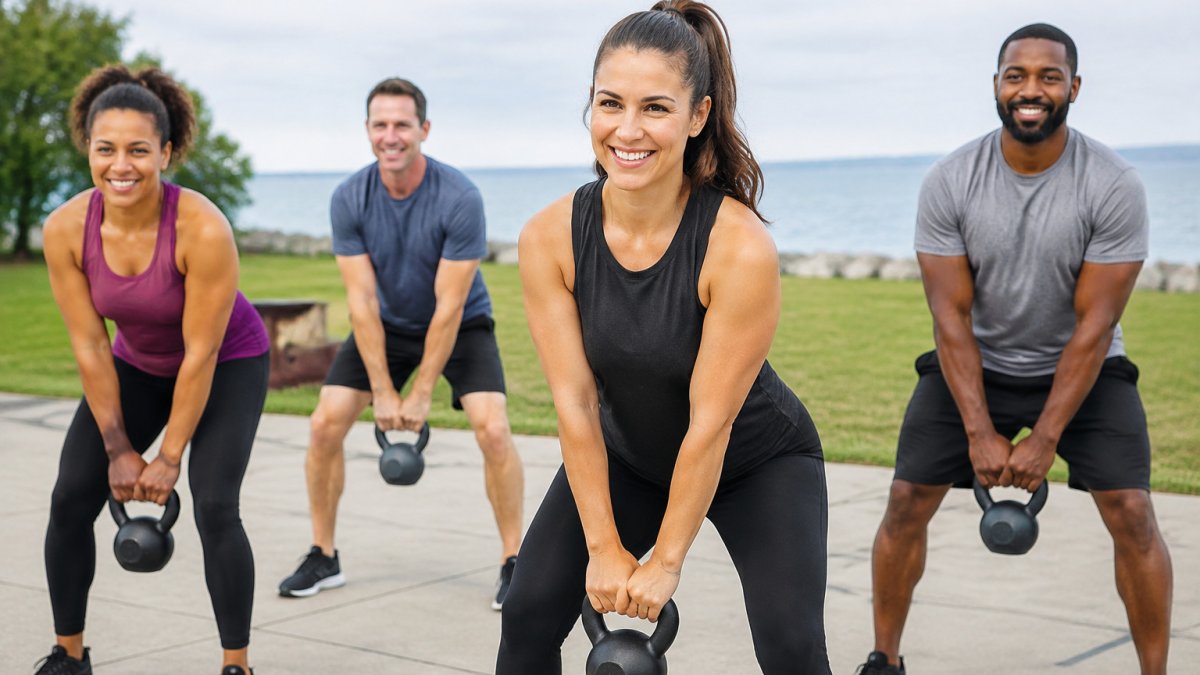
Boot camp. Our Get Fit Boot Camp classes combine strength and conditioning in a group setting.
Small-group training. Our small group training keeps the group deliberately small.
Virtual training. Our virtual training offer live sessions on Zoom, letting clients train from home, the office or while traveling, with direct verbal interaction.
Circuit-style workouts. Station-based circuits suit people who like variety. Participants rotate through exercises at their own pace, which makes them easy to scale.
Home bodyweight routines. Simple bodyweight workouts require no equipment and make a sensible starting point. They are also useful between group sessions.
Many people find that Various Boot Camp Classes Compared: Formats, Costs, and Fit helps them weigh formats and costs side by side before choosing.
Small-Group Workout Ideas and Speed and Agility Training Games
Speed and agility work fits small groups well because most drills need only a short runway, a few cones or taped lines, and a timer. The key is to structure the session so people are moving, not waiting.
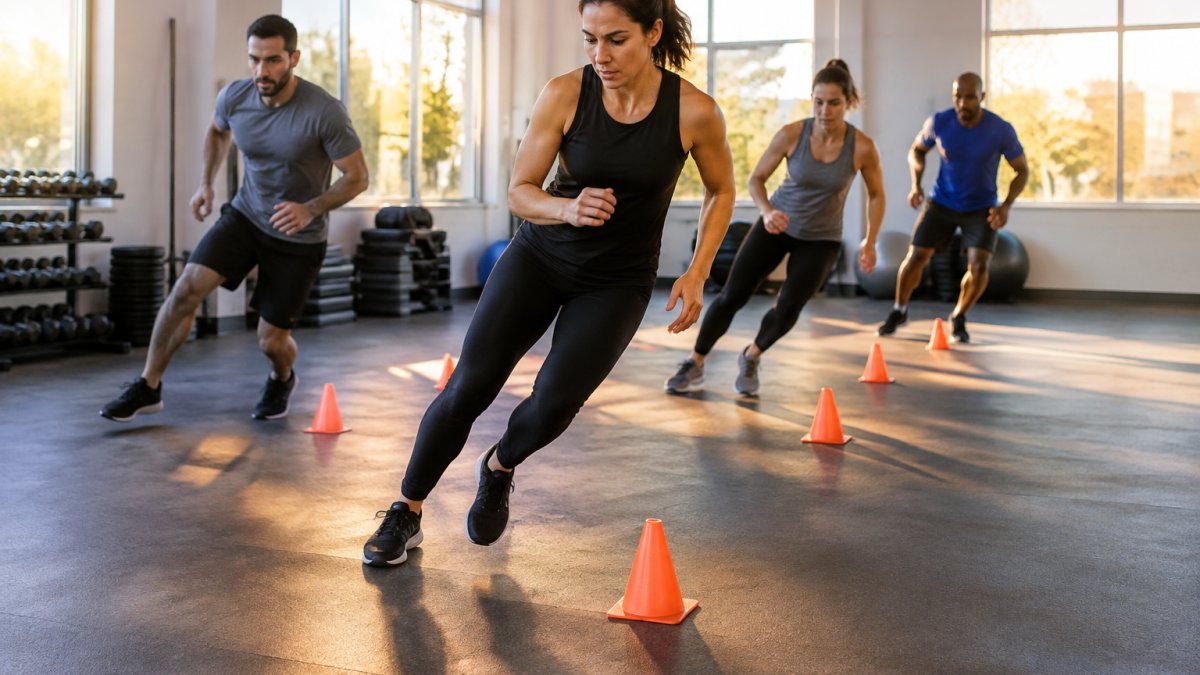
20-minute speed and agility session (three to six people)
- Warm-up (4 minutes): Two rounds of 30 seconds of jogging in place, 30 seconds of arm circles, 30 seconds of bodyweight squats, and 30 seconds of walking knee hugs. Keep the pace easy.
- Station block (12 minutes): Set up three stations and rotate every 40 seconds of work with 20 seconds to move to the next station. Station 1 is shuttle runs between two lines about 10 yards apart. Station 2 is ladder steps or quick feet over taped lines. Station 3 is jump rope or imaginary jump rope intervals. Run two full rotations.
- Cool-down (4 minutes): Walk for two minutes, then hold a calf stretch and a hip flexor stretch for 30 seconds per side.
30-minute session with a partner and team block
- Warm-up (5 minutes): Same warm-up as above, plus two 20-yard build-up runs at about 70 percent effort.
- Partner intervals (10 minutes): Pairs alternate 30 seconds of mirror drill with 30 seconds of rest. One partner leads side-to-side movement; the other follows. Switch leaders every round.
- Team challenge (10 minutes): Relay races with three stations. Teams complete a station and tag the next teammate. Award a point for finishing first with correct form, not just for speed.
- Cool-down (5 minutes): Easy walking and stretching.
Drill mechanics that keep groups safe and moving
- Shuttle runs: Sprint between two marked points, touch each line, then repeat. Rest between rounds. Keep the distance short enough that form stays clean; most groups do better with 10-yard shuttles than with long sprints.
- Mirror drill: Partners face each other and move side to side, one leading and one following. This teaches deceleration and body control without requiring equipment.
- Ladder steps: Quick feet through an agility ladder or taped lines on the floor. Emphasize light, quick contacts rather than heavy stomping.
- Jump rope intervals: Alternate 30 seconds of skipping with 30 seconds of rest. Participants who cannot skip can march in place or do quick feet without the rope.
Adapting for group size and fitness level
With three people, run one station at a time and use the third person as a timer or counter, then rotate roles. With five or six, set up two lanes of each station so no one stands idle for more than one turn. For mixed fitness levels, give each participant a work-to-rest ratio that fits: beginners might use 20 seconds of work and 40 seconds of rest, while conditioned participants use 40 seconds of work and 20 seconds of rest. Older adults and people with limited mobility can do the same drills at walking speed, use a chair for support during ladder steps, or substitute low-impact marching for jump rope.
Watch out: Fast drills done with poor form are a common route to strained knees and ankles. Slow the movement down until technique is solid, and stop any drill that causes joint pain rather than pushing through it. Anyone with joint problems, recent injuries, or heart concerns should get medical clearance first and modify these drills.
Team Conditioning Games and Team Workout Challenges
Games make conditioning more engaging, especially for groups that are new to training together.
- Relay races: Teams complete a station and tag the next teammate. Points go to the team that finishes all stations first with correct form.
- Partner countdowns: Pairs alternate exercises such as squats and push-ups, one rep at a time, until a set total is reached.
- Team challenges: The group works toward a combined repetition goal, so each person's effort counts toward a shared result.
Challenges like these build camaraderie, which is one of the strongest reasons people stick with group training.
Group Size, Coach Ratios, and Tracking Progress
Group size changes both the coaching experience and the workout design. A ratio of one coach to three or four participants is a common target for small-group training because it allows direct form correction without long waits.
Coach-to-participant ratios and station math
- One coach, three participants: One station at a time works well. The coach can watch every rep and correct form in real time.
- One coach, four to six participants: Use two lanes of each station so no one waits more than one turn. Keep work intervals short (30 to 40 seconds) so the coach can rotate attention.
- One coach, seven or more participants: Add a second coach or convert the session to a partner format where pairs count and correct each other while the coach circulates. Without a second coach, waiting time grows and supervision drops.
A simple rule: count the number of participants, divide by the number of stations, and keep the result at two or fewer. If six people share three stations, two people per station is workable.
Tracking progress without individual testing
Groups can measure outcomes without testing each person separately or buying expensive equipment. Record the following in a shared log or spreadsheet after each session:
- Attendance: Mark who attended each week. Attendance is the first measurable sign of whether a format is sustainable.
- Work intervals completed: Note how many rounds or stations each person finished. This captures effort without requiring a max test.
- Repetition counts for two or three key exercises: Pick a small set, such as squats, push-ups, or step-ups, and record repetitions at a fixed interval once every few weeks.
- Circuit time: Time a fixed conditioning circuit and repeat it every three to four weeks. A shorter time with the same form is a clear marker of improvement.
- Recovery and energy: Use a simple one-to-five rating for energy and soreness after each session. Patterns matter more than any single day.
Watch out: Tracking too many variables makes the log burdensome and people stop using it. Choose three or four markers, keep the log visible to the group, and review it together every few weeks so the data drives adjustments rather than sitting unused.
Booking Your First Small-Group Session or Boot Camp Class in Roseville
If you are ready to try a group format, start with a beginner-friendly option. Our small group training sessions or Get Fit Boot Camp classes are a group option to consider. When you are ready to book or have questions about sessions, contact us directly.
Before your first session, bring water, comfortable athletic clothing and any notes about injuries or health conditions. Tell your coach about anything that affects your training so the workout can be adjusted.
Frequently Asked Questions
What is the difference between small-group training and personal training?
Personal training gives you one trainer and one client, so every session is built around your schedule and goals. Small-group training usually limits the class to a handful of participants, often around three, so each person gets less one-on-one correction but pays less per session and benefits from group energy. Personal training suits people who need close form monitoring or have specific health concerns. Small groups suit people who want structure and motivation from peers. Many people start with small groups and add individual sessions when they need targeted technique work.
What are good speed and agility training games for small groups?
Simple games work well for small groups because they build speed, reaction time, and footwork without heavy equipment. Try a tag game where participants sprint short bursts after a coach's signal, a mirror drill where partners copy each other's lateral movements, or a cone relay where teams race through a shuttle-run course. Keep rounds to 20 to 30 seconds with 30 to 60 seconds of rest. Adjust distances and intensity for beginners so everyone can finish each round with good form.
How can you organize a team conditioning workout?
Start with a 5-minute warm-up, then run three or four stations of 30 to 45 seconds each, such as jump rope, bodyweight squats, or resistance-band rows. Rotate teams through stations so the coach can watch form. Finish with a team challenge, such as completing a set number of rounds together before a timer ends. Track total rounds completed each week so the group can see progress. Scale reps and rest for participants with joint or blood pressure concerns, and check with a qualified professional before starting if you have health conditions.
Are small-group workouts effective for beginners?
Small-group workouts can work well for beginners because a limited class size gives the coach time to correct form and adjust exercises. Beginners often feel less intimidated in a small, supportive group than in a crowded gym. Start with lower-intensity versions of each exercise, focus on consistent attendance, and ask the coach to show modifications. Progress should be gradual, and anyone with a medical condition should get clearance from a healthcare provider before beginning a new exercise program.
Choosing a fast training alternative comes down to schedule, budget and goals. Contact Xtreme Advantage Personal Training to find the format that fits your life in Roseville.