 Ultimate guide
Nutritional Guidance for Weight Loss Success
Quick Summary
Effective nutritional guidance for weight loss combines a modest calorie deficit with balanced meals built around protein, fiber-rich vegetables and whole grains, and portions you measure at first. Track your intake for two to three weeks, then adjust gradually rather than cutting calories aggressively.
- Weight loss happens when energy intake stays consistently lower than energy expenditure over time.
- Build each meal around a palm-sized protein, fist-sized vegetables, cupped-hand carbohydrate and thumb-sized healthy fat.
- Log food for two weeks to reveal habits that account for most excess calories.
- Include a protein source at every meal, since protein promotes fullness and preserves lean muscle.
- Batch-cook two proteins and one grain on the weekend to make weekday meals quick.
Table of Contents
- Why Nutritional Guidance Matters for Weight Loss
- Understanding Calorie Balance and Setting Realistic Goals
- Building a Weight Loss Meal Plan You Can Sustain
- Portion Control for Weight Loss: Reading Labels and Measuring Food
- High-Protein Foods for Weight Loss and Fullness
- A 7-Day Diet Plan for Weight Loss You Can Adapt
- Getting Personalized Guidance and Starting Your Plan This Week
- Frequently Asked Questions
Why Nutritional Guidance Matters for Weight Loss
Obesity affects a large share of U.S. adults, which makes sustainable weight loss one of the most common health goals in the country (the CDC). Food is usually the largest lever, yet most people try to lose weight by guessing at what to eat. Nutritional guidance replaces guesswork with a clear plan for calorie intake, food quality and portion size.
At Xtreme Advantage Personal Training, we see the same pattern repeatedly: people train hard but still stall because their eating is inconsistent. Training burns energy, but nutrition decides whether that energy is actually spent. Pairing a structured workout routine with practical food guidance is what keeps weight loss moving forward.
Good nutritional guidance does three things. It shows you how much you need to eat, it shows you which foods support fullness and recovery, and it gives you a process you can repeat without relying on willpower alone. That combination is what turns a short diet into lasting weight loss success.
Understanding Calorie Balance and Setting Realistic Goals
Weight loss happens when energy intake is consistently lower than energy expenditure over time. This is the energy deficit, and it is the foundation of every effective weight-loss plan. Reducing intake, increasing activity, or doing both creates the deficit.
Realistic goals matter because they determine whether you can keep the deficit going. Gradual weight loss is generally considered easier to maintain than rapid crash approaches, and a steady pace is the usual goal (the CDC). Check official health sources or a qualified professional for guidance suited to you.
A common mistake is cutting calories too aggressively in the first week. That produces fast early results, then fatigue and hunger that make it hard to continue. A better starting point is a modest reduction, tracked for two to three weeks, then adjusted based on what the scale and your energy levels show.
Setting a target around sustainable pace also protects muscle, which supports metabolism. Once you know your starting point, the next step is building meals around that target.
Building a Weight Loss Meal Plan You Can Sustain
The best meal plan is the one you will still follow in month six. Most people fail not because they picked the wrong foods but because the plan did not survive a busy Tuesday.
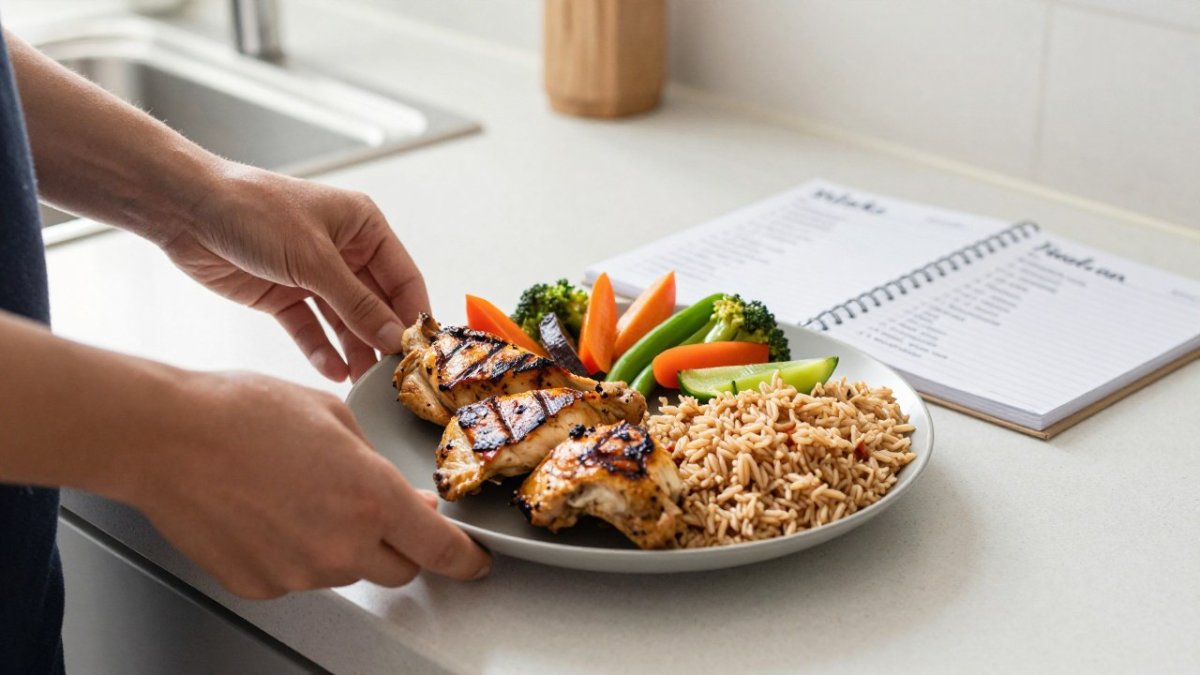
Start with a meal template rather than a rigid menu.
Translate the template into a grocery list.
Batch-cook two anchor proteins and one grain on the weekend. Roast a tray of chicken thighs or bake a block of tofu, cook a pot of brown rice or quinoa, and wash and chop vegetables. Having those components ready turns a 30-minute dinner into a 10-minute assembly.
Build in substitutions so the plan bends instead of breaking. If chicken is not on sale, use canned tuna, eggs, or lentils. If you do not eat meat, swap in tofu, tempeh, or beans at the same palm-sized portion.
Watch out: a plan that eliminates entire food groups or relies on a single 'approved' meal for weeks is a setup for binge eating and nutrient gaps.
Gradual change beats a total overhaul. Swap sugary drinks for water or unsweetened tea, add a vegetable to one meal per day, and replace refined grains with whole grains a few times a week.
Nutrition planning becomes more effective when paired with coaching. Xtreme Advantage Personal Training offers customized workouts and nutritional guidance, so eating plans can be adjusted to fit real life.
Portion Control for Weight Loss: Reading Labels and Measuring Food
Portion size is often the difference between a deficit and a surplus. Calorie-dense foods such as oils, nut butters, cheese and granola can add hundreds of calories with very little volume. Measuring these foods for a short period teaches you what a real serving looks like.
Food labels provide the numbers you need. Check the serving size first, because many packages contain two or more servings. Then look at calories per serving, total fat, added sugars and protein. U.S. nutrition labels follow a standard format, which makes comparing products straightforward.
A food diary, whether on paper or in an app, helps you see patterns. Many people underestimate intake by a meaningful margin, especially with snacks, drinks and cooking oils. Logging food for two weeks often reveals one or two habits that account for most of the excess calories.
Measuring cups, a kitchen scale and the plate method (half vegetables, a quarter protein, a quarter carbohydrate) are practical tools for keeping portions consistent without constant weighing.
The article gives a few practical tools for keeping portions consistent, summarised below.
| Tool | What it does | Note |
|---|---|---|
| Food labels | Show serving size, calories, fat, sugar and protein | Check serving size first; many packages hold two or more servings |
| Food diary | Reveals patterns in intake | Logging for two weeks often exposes one or two key habits |
| Measuring cups | Keeps portions consistent | Useful for calorie-dense foods like oils and nut butters |
| Kitchen scale | Measures food by weight | Helps without constant weighing once habits are learned |
| Plate method | Half vegetables, quarter protein, quarter carbohydrate | A practical visual guide at meals |
High-Protein Foods for Weight Loss and Fullness
Protein is one of the most useful nutrients for weight loss because it promotes satiety and helps preserve lean muscle while you are in a calorie deficit (pubmed.ncbi.nlm.nih.gov). Including a source of protein at every meal makes it easier to stay full between meals.
Practical high-protein options include eggs, Greek yogurt, cottage cheese, skinless chicken breast, fish, lean beef, tofu, lentils and beans. Combining protein with fiber-rich vegetables adds volume to meals without adding many calories.
A common approach is to aim for a palm-sized portion of protein at breakfast, lunch and dinner. Breakfast is often the most neglected meal for protein, so a simple change like adding eggs or Greek yogurt can reduce mid-morning snacking.
Protein does not need to be expensive. Canned fish, frozen chicken thighs, dried beans and eggs are budget-friendly options that deliver a lot of protein per dollar.
A 7-Day Diet Plan for Weight Loss You Can Adapt
The sample plan below shows how the principles in this guide fit together. Your calorie target may be higher or lower depending on your size, activity level, and goals. Adjust portions and swap foods to match your calorie target, preferences, and budget. Each day lands near 100 to 140 grams of protein, which supports fullness and muscle retention during a deficit.
- Day 1: Breakfast of 1 cup plain Greek yogurt with 1/2 cup berries and 1/4 cup oats; lunch of 4 ounces grilled chicken over 2 cups salad greens with 1 tablespoon olive oil dressing; dinner of 5 ounces salmon, 1 cup roasted broccoli, and 1/2 cup cooked quinoa.
- Day 2: Breakfast of two eggs with 1 cup spinach and one slice whole-grain toast; lunch of 1 cup lentil soup with a side salad; dinner of 1 cup lean turkey chili with beans and 1/2 cup brown rice.
- Day 3: Breakfast of 1/2 cup overnight oats with 1 tablespoon chia seeds and 1/2 cup berries; lunch of 3 ounces tuna and 1/4 avocado on two slices whole-grain bread; dinner of 4 ounces stir-fried tofu with 2 cups mixed vegetables and 1/2 cup brown rice.
- Day 4: Breakfast of 1/2 cup cottage cheese with 1 cup sliced fruit; lunch of a turkey and vegetable wrap on a whole-grain tortilla; dinner of 5 ounces baked cod, 1 medium sweet potato, and 1 cup green beans.
- Day 5: Breakfast of a protein smoothie with 1 scoop protein powder, 1 cup spinach, and 1/2 banana; lunch of a black bean bowl with 1/2 cup beans, peppers, salsa, and 1/4 cup rice; dinner of 4 ounces lean beef stir-fry with 2 cups vegetables.
- Day 6: Breakfast of two scrambled eggs with 1/2 cup peppers; lunch of leftover stir-fry; dinner of 4 ounces grilled chicken, 1 cup roasted vegetables, and 1/2 cup whole-grain pasta.
- Day 7: Breakfast of a Greek yogurt parfait with 1/2 cup berries and 2 tablespoons granola; lunch of chicken and vegetable soup; dinner of 3 shrimp tacos on corn tortillas with 1 cup cabbage slaw.
Use this plan as a template, not a rulebook. Track your intake for the first week, then adjust portions if your weight stalls for two or more weeks. If you are hungrier than expected, add vegetables or a few ounces of protein before cutting calories further.
Watch out: a sample plan that ignores your budget, culture, or cooking access will not last. Swap salmon for canned tuna, quinoa for rice, and fresh produce for frozen without losing the nutritional structure. If you have a medical condition, take medications that affect appetite or blood sugar, or are pregnant or breastfeeding, use this plan only after checking with a registered dietitian or your clinician.
Getting Personalized Guidance and Starting Your Plan This Week
Plateaus, injuries, medical conditions and busy schedules all make a generic plan harder to follow. Personalized support can help you adjust your nutrition and training as your results change. If you want guidance that fits your goals and schedule, book virtual training for remote sessions from wherever you are, or contact us to ask how personalized support can fit your routine. If you are weighing whether professional help is worth the investment for weight loss, our local value breakdown explains what to expect. For a meal plan built around your needs, start with personalized nutrition plans for weight loss.
Start this week by tracking your current intake for three days, choosing one protein-rich breakfast, and setting a realistic weekly target. Small, consistent steps are what produce lasting weight loss success.
Frequently Asked Questions
What is the 3-3-3 rule to lose weight?
The 3-3-3 rule is a simple structure some people use to organize meals: three balanced meals, three protein-containing items and three vegetable servings each day. It is a memory aid rather than a clinically validated program, so its value depends on whether it helps you keep total calorie intake below what your body uses. Pair any structure like this with portion awareness and a sustainable pace of gradual weight loss, and check with a qualified professional if you have a medical condition.
How much protein should I eat while trying to lose weight?
Protein helps with fullness and preserving muscle during a calorie deficit, which is why it is a common focus in nutritional guidance for weight loss success. Many people build each meal around a palm-sized portion of lean protein, such as chicken, fish, eggs, Greek yogurt or beans. The right amount depends on body size, activity level and health history, so a registered dietitian or your physician can help set a target that fits you.
Are there specific foods I should avoid to lose weight?
No food is strictly off limits, but calorie-dense foods with added sugar, refined carbohydrates and high amounts of dietary fat are easy to overeat and can make a calorie deficit harder to reach. Reading food labels for serving size and added sugar helps you spot them. Focus first on reducing sugary drinks and frequent snacks, then adjust portions of the rest rather than cutting entire food groups.
Can a personal trainer help with nutrition and weight loss?
Yes. At Xtreme Advantage Personal Training, we provide customized workouts alongside nutritional guidance, so exercise and eating habits are planned together rather than separately. A trainer can help you track progress, adjust your plan when you hit a plateau and stay consistent over time. Trainers do not replace medical advice, so anyone with blood pressure concerns or other health conditions should consult a qualified professional.
How do I stay consistent with healthy eating for weight loss?
Consistency usually comes from small, repeatable habits: planning meals for the week, keeping a simple food diary and choosing foods you actually enjoy. Expect weight fluctuations from day to day and judge progress over several weeks. A flexible schedule, including virtual sessions with 12-hour notice, can make it easier to stay on track during a demanding week.