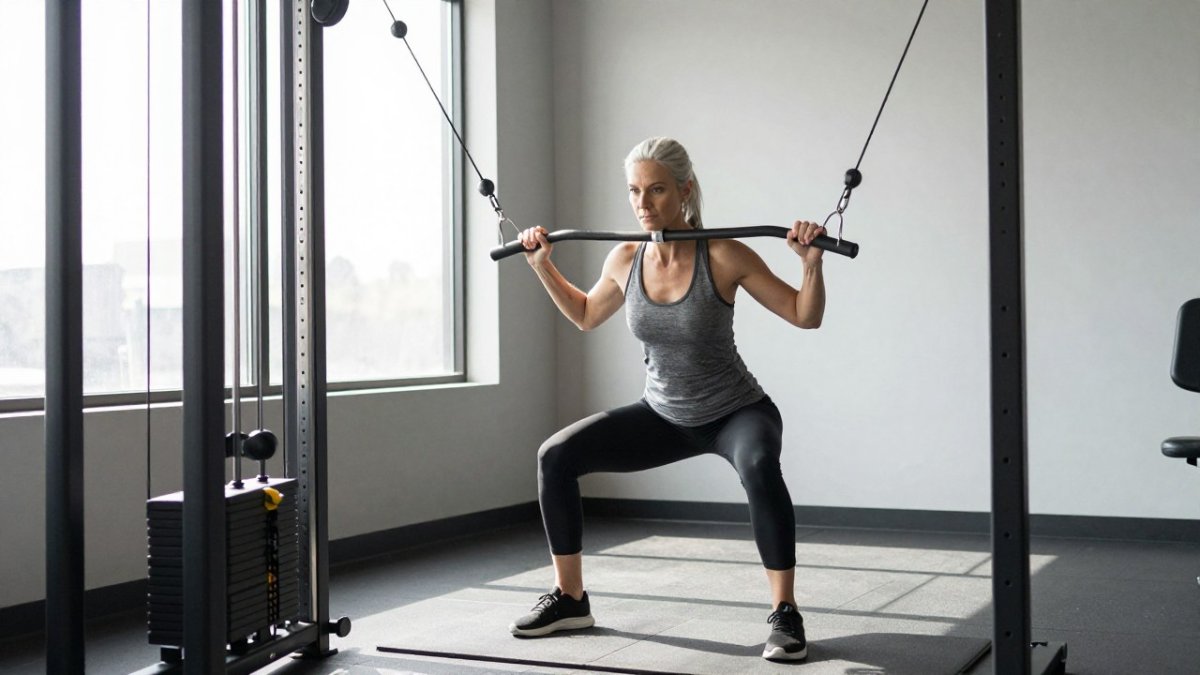
 Ultimate guide
Strength Training for Seniors Mobility: The Complete Guide
Last Updated: November 16, 2026
Quick Summary
Strength training for seniors mobility means building the leg, hip, and upper-body muscles used in daily movement, like walking, standing from a chair, and climbing stairs. Effective routines use body weight, a sturdy chair, and a wall, with two to three sessions per week. Balance work helps reduce the risk of falls.
- Choose a movement you can complete with good form for 10 to 15 repetitions, then build from there.
- Train two to three times per week, with at least one rest day between sessions.
- Chair squats and heel raises build the leg strength used in walking and standing.
- Balance exercises such as one-foot standing near a counter help reduce fall risk.
- Stop and seek medical advice for chest pain, dizziness, severe shortness of breath, or sharp joint pain.
Table of Contents
- Strength Training for Seniors at Home: Equipment-Free and Low-Cost Setups
- Lower-Body and Upper-Body Exercises Using Chair and Standing Movements
- Senior Balance and Mobility Exercises for Fall Prevention
- Strength Training for Seniors Over 70: Safe Progression and Modifications
- A Week-by-Week Plan, Progress Tracking and Stop-Exercise Guidance
- Download a Printable Strength Training for Seniors Mobility PDF and Start Your Routine
- Frequently Asked Questions
Strength training for seniors mobility is one of the most practical investments an older adult can make in their independence. Xtreme Advantage Personal Training & More works with clients of all fitness levels, including seniors who want to keep moving comfortably in everyday life. Our approach is simple: build the muscles that support walking, standing up from a chair, and climbing stairs, then progress carefully over time.
The goal is not to lift heavy weights. It is to keep the body capable of the movements it performs every day, from reaching a high shelf to getting up off the floor. Those functional abilities depend heavily on leg and hip strength, which tends to decline with age unless it is trained.
Balance and mobility work fit alongside strength training. Each supports the others, and together they help reduce the risk of falls. At Xtreme Advantage Personal Training, we train clients of all fitness levels, from beginners to athletes, through customized workouts.
Strength Training for Seniors at Home: Equipment-Free and Low-Cost Setups
You do not need a gym membership to begin. Many effective strength exercises use body weight, a sturdy chair, a wall, and a few inexpensive items such as resistance bands or light hand weights.
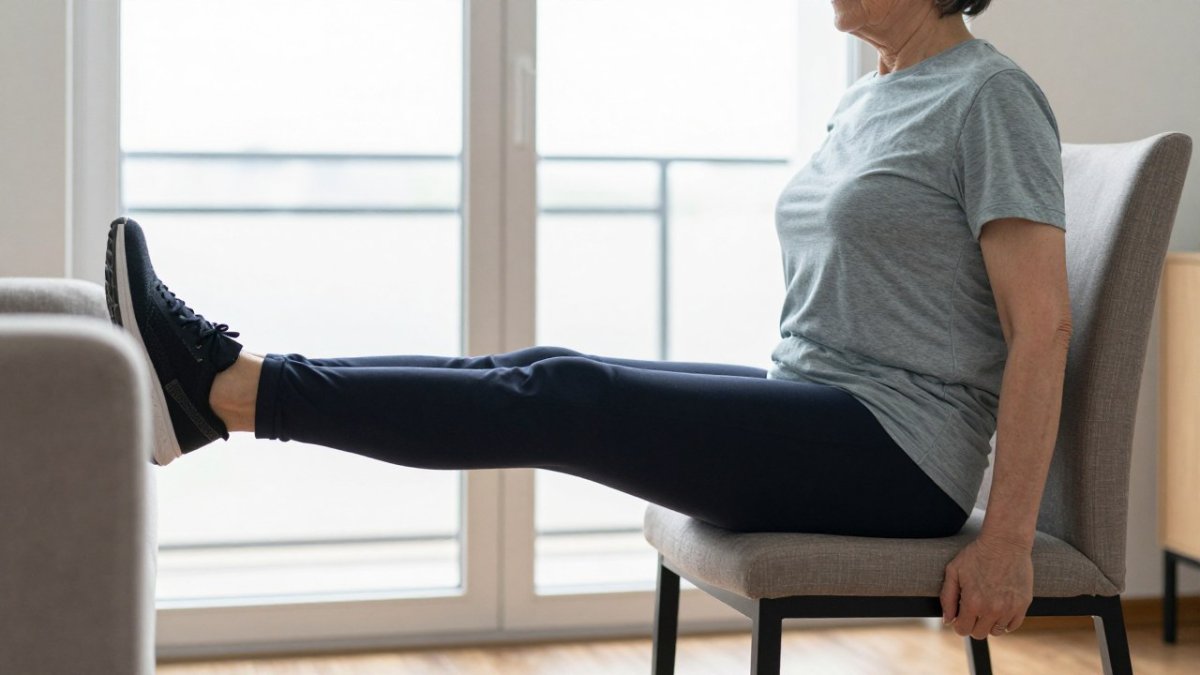
A basic home setup might include a firm chair without wheels, a clear space free of rugs, and a supportive surface to hold for balance. Resistance bands are often the most affordable upgrade, and they can be purchased in multiple resistance levels.
The most common mistake we see is starting too hard. Choose a movement you can complete with good form for 10 to 15 repetitions, then build from there. Training two to three times per week, with at least one rest day between sessions, gives the body time to adapt.
Virtual training with Xtreme Advantage Personal Training offers live guided sessions via Zoom, with direct verbal interaction, if you prefer structure while training at home.
Lower-Body and Upper-Body Exercises Using Chair and Standing Movements
Lower-body work is central to mobility. Chair squats, performed by sitting down and standing back up without using your hands, build the same strength used in everyday movement. Heel raises and calf raises strengthen the lower legs, which support walking and stability.
Upper-body strength matters just as much for pushing, pulling, and carrying. Wall push-ups are a gentle starting point, progressing to incline push-ups on a counter as strength improves. Seated rows using a resistance band target the back and help with posture.
Standing exercises such as marching in place, knee lifts, and toe taps build coordination alongside strength. Perform each movement slowly and under control, and stop if you feel sharp pain.
Senior Balance and Mobility Exercises for Fall Prevention
Balance training is the part of a routine most often skipped, yet it addresses one of the biggest risks for older adults. Simple exercises include standing on one foot while holding a chair, heel-to-toe walking along a wall, and shifting weight from side to side.
Mobility work keeps joints moving through their full range of motion. Pelvic tilts, gentle hip circles, and shoulder blade squeezes can be done seated or standing. Pairing these with strength exercises improves how the body moves as a whole.
Practice these in a space where you can reach a stable support. Balance progress is gradual, and a few minutes a day adds up over several weeks.
Strength Training for Seniors Over 70: Safe Progression and Modifications
Training after 70 calls for patience and individual adjustment. Everyone's health history, joint condition, and medications differ, so a routine should match the person performing it. Safe Exercise for Beginners With Health Conditions explains how to adapt exercises for health limitations. Anyone with a heart, blood pressure, or joint condition should check with a doctor before starting a new program. Fitness Training for High Blood Pressure: A Safe Plan covers training safely with these medical considerations.
Arthritis or joint pain. Favor controlled, pain-free range of motion over deep ranges. Seated leg extensions, seated marching, and partial-range chair squats often work better than full squats. Warm water exercise or a 5-minute warm-up before resistance work can reduce stiffness.
Osteoporosis. Avoid loaded spinal flexion and twisting under resistance, such as heavy bent-over rows or weighted twists. Favor upright movements: wall push-ups, standing band rows with a neutral spine, chair squats, and heel raises. Balance work becomes especially important because it addresses fall risk, which matters more when bone density is low. Seek individualized clinical guidance for any exercise that loads the spine.
Limited balance or use of a mobility aid. Keep one hand on a counter, wall, or sturdy chair for every standing movement, and choose a chair without wheels for seated work. If you use a cane or walker, perform standing exercises beside the aid rather than setting it aside.
Knee or hip concerns. Raise the chair height for sit-to-stand by placing a firm cushion on the seat, and limit squat depth to what is comfortable. Side-lying hip abduction and seated leg extensions build supporting muscles with less joint stress than deep lunges. Avoid movements that reproduce sharp pain; mild discomfort that fades with rest is a different signal.
Shoulder concerns. Wall push-ups and incline push-ups on a counter reduce shoulder load compared with floor push-ups. Band rows can be performed seated with the elbows close to the body. Keep the range of motion below the point of pinching or pain.
Progress slowly. Increase repetitions or resistance only when the current level feels manageable across the full set. Modifications are essential: a seated version of a movement is a valid choice, not a failure. Trainers at Xtreme Advantage Personal Training & More can customize workouts to individual needs.
Watch out: if a modification still produces sharp joint pain, dizziness, chest discomfort, or unusual shortness of breath, stop the exercise and seek medical advice rather than working through it.
A Week-by-Week Plan, Progress Tracking and Stop-Exercise Guidance
A structured plan makes consistency easier, and a clear progression from beginner to more challenging sessions is what turns a list of exercises into a sustainable routine. The plan below assumes two to three sessions per week with at least one rest day between sessions.
Weeks 1-2: Foundation. Two sessions per week, all chair-based or supported. Include a 5-minute dynamic warm-up (seated marching, arm circles, ankle pumps), then chair squats, seated leg extensions, seated band rows, and wall push-ups. Finish with 2-3 minutes of gentle range-of-motion work such as pelvic tilts and shoulder blade squeezes.
Weeks 3-4: Add standing work. Keep two sessions, and if recovery feels good, add a third. Introduce standing heel raises, supported marching in place, and sit-to-stand from a firm chair. Keep the same 10-12 repetitions but add a second set to one or two exercises.
Weeks 5-6: Build volume. Three sessions per week. Increase to 2 sets of 10-15 repetitions on lower-body movements and add incline push-ups on a counter and standing band rows. Add heel-to-toe walking along a wall for 10-15 steps. This is the stage where most people notice stairs and chair transfers feeling easier.
Weeks 7-8: Progress resistance or difficulty. Add a light band or hand weight to one or two exercises, or slow the tempo of each repetition to three seconds down and one second up. Keep balance work challenging but supported. If a movement feels unsteady, return to the prior week's version rather than pushing through.
Weeks 9-12: Consolidate and vary. Maintain three sessions per week, rotating lower-body, upper-body, and balance emphases so no single joint is loaded every session. Recheck your baseline assessments (below) at the end of week 12 and adjust the next cycle.
How to assess progress. Simple, safe measures work better than complicated tests. The 30-second chair stand counts how many times you can rise from a firm chair without using your hands in 30 seconds. Single-leg balance time records how long you can stand on one foot while holding a counter.
Stop-exercise guidance. Stop immediately if you experience chest pain or pressure, dizziness or lightheadedness, severe shortness of breath, or sharp pain in a joint (Diabetes and exercise : MedlinePlus Medical Encyclopedia). Muscle fatigue and mild soreness that resolves within a day or two are normal; sharp, sudden, or radiating pain is not.
Xtreme Advantage Personal Training offers personal training if you would like hands-on guidance with your plan.
The plan builds gradually from chair-based foundations to more challenging sessions, and the article lists these progress checks and stop signals.
Week | Sessions per week | Volume or focus |
|---|---|---|
Weeks 1-2 | Two | Chair-based or supported; 1 set of 10-12 reps |
Weeks 3-4 | Two, possibly three | Add standing work; add a second set to one or two exercises |
Weeks 5-6 | Three | 2 sets of 10-15 reps on lower-body movements |
Weeks 7-8 | Three | Add a light band or hand weight, or slow the tempo |
Weeks 9-12 | Three | Rotate lower-body, upper-body and balance emphases |
Download a Printable Strength Training for Seniors Mobility PDF and Start Your Routine
Ready to begin? Use the exercises above to build your first week, track your progress, and move at a pace that feels safe. If you would like personalized support, Xtreme Advantage Personal Training & More offers personal training, small group training, and virtual training.
Get started with Xtreme Advantage Personal Training & More and build the strength you need to move with confidence.
Frequently Asked Questions
Should a 70-year-old do strength training?
Yes, most adults in their 70s can benefit from strength training, and it is one of the most useful activities for maintaining mobility and independence. Starting with light resistance such as bodyweight, resistance bands or light hand weights and working two to three days per week is a common approach. Because health conditions vary, talk with a doctor before starting, especially if you have heart disease, blood pressure concerns or joint problems. A qualified trainer can help you adjust exercises so they match your ability and goals.
How often should older adults do strength training?
Most older adults do well with strength training about two times per week, with at least one rest day between sessions so muscles can recover. Each session can include a handful of exercises that work the legs, hips, back, chest and arms. Start with one set of 10 to 15 repetitions and build toward two or three sets as strength improves. Consistency over several weeks matters more than doing a hard workout once.
Can seniors improve mobility with strength exercises at home?
Yes, many seniors improve mobility at home using chair-based exercises, standing movements and body-weight work. Exercises such as sit-to-stand, heel raises, marching in place and wall push-ups build the muscles used for standing up, walking and climbing stairs. A stable chair and a clear space are usually enough to start. If you have balance concerns, keep a sturdy counter or wall within reach and progress slowly.
Which strength exercises help with standing up and climbing stairs?
Sit-to-stand, chair squats, step-ups onto a low stair and calf raises target the leg and hip muscles used in these movements. Practice sit-to-stand from a firm chair with your feet flat and arms crossed, then progress by using your arms less. Perform 10 to 15 repetitions with controlled lowering. Stop and seek guidance if you feel sharp pain, dizziness or unusual shortness of breath.
What is a good strength training routine for seniors?
A good starting routine includes one lower-body exercise such as chair squats, one upper-body exercise such as seated rows with a resistance band, one balance exercise such as standing on one foot near a counter, and one mobility exercise such as pelvic tilts. Perform one to two sets of 10 to 15 repetitions, twice per week. Increase difficulty every two to three weeks by adding a set, more resistance or less support. Keep a simple log of repetitions and how you felt to track progress.