 how-to
How Can Beginners Overcome Gym Intimidation?
Last Updated: October 25, 2026
Quick Summary
Gym intimidation beginners face stems from uncertainty about equipment, fear of judgment, and sensory overload, but it's manageable through preparation, starting with machines, and asking staff for help. Most gym-goers focus on their own workouts, not judging others, and staff expect beginner questions and want you to succeed.
- Start with machines on a fixed path rather than free weights, as they guide your movement and require less stabilization work.
- Visit the gym during quieter times and ask staff specific questions like how to adjust equipment and where facilities are located.
- Use a simple three-day-per-week plan with 5-minute warm-up, three machine exercises at 3 sets of 10 reps each, and 5-minute cool-down stretch.
- If anxiety spikes mid-workout, use box breathing for three cycles, name five visible things in the room, and pick one small next action to regain control.
- Progress from machines to dumbbells after four to six weeks once you can complete three sets of ten reps with steady form and no soreness.
Table of Contents
- Understanding Gym Intimidation and Why It Happens
- Your First Day at the Gym for Beginners: A Practical Walkthrough
- How to Use Gym Equipment for Beginners Without Fear
- How to Ask for Help at the Gym and Get It Right
- A Beginner Gym Workout Plan to Build Momentum
- What to Do When Anxiety Spikes During Your Workout
- Choosing a Gym That Feels Genuinely Welcoming
- Start Your Fitness Journey With Confidence
- Frequently Asked Questions
Understanding Gym Intimidation and Why It Happens
Gym intimidation beginners face is real and common. Walking into a fitness facility for the first time feels overwhelming: everyone looks confident while you wonder if they're watching you. Most people are focused on their own workout, not judging you, but that doesn't make the feeling go away. Gym intimidation beginners encounter daily is manageable once you understand what's driving it.
Several things fuel gym intimidation:
- Uncertainty about equipment. You don't know what machines do or how to use them safely.
- Fear of judgment. You worry that experienced lifters will notice you don't belong.
- Not knowing the unwritten rules. Where do you put your stuff? How long can you use a machine? Is it okay to ask someone for help?
Your First Day at the Gym for Beginners: A Practical Walkthrough
Your first day sets the tone. A solid plan removes uncertainty and builds confidence.
Before You Arrive: Preparation Checklist
Do this work before you walk through the door:
- Visit the gym's website and look at photos of the layout
- Watch a 5-minute YouTube video of someone using the main equipment you'll try
- Bring a water bottle and towel (you'll feel more prepared)
When You Walk In: What to Expect
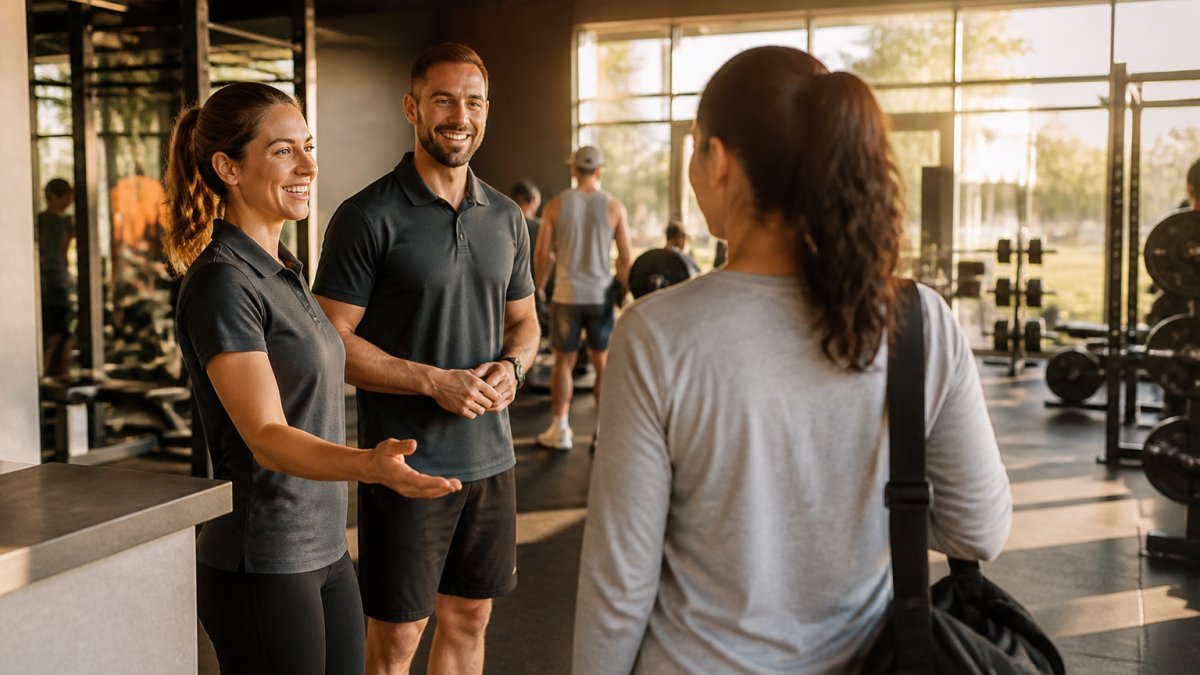
You'll likely check in at a front desk, where someone will offer a tour. Say yes, it takes the guesswork out of finding things.
During the tour, ask these specific questions:
- "Where's the water fountain?"
- "How do I adjust the treadmill?"
- "Is there a quiet area for stretching?"
Staff expect these questions and want you to succeed.
Spend 10 minutes finding the bathrooms, locker area, and main workout zones. Familiarity kills anxiety.
How to Use Gym Equipment for Beginners Without Fear
Equipment intimidation is a big barrier, but most machines look more complicated than they are. Every machine has a sticker or diagram showing the starting position and path of movement, read it once, adjust the seat or handles, and start with the lightest setting. Start with machines, not free weights: they guide your movement along a fixed path and do stabilizing work for you, exactly what you want in week one.
The five most beginner-friendly machines, and what to do when one is taken
The real beginner problem isn't learning a machine; it's arriving to find that machine occupied. Have a substitute ready for each one so you never stand around looking lost.
- Treadmill. Press the green start button, set speed with the up/down arrows, and hold the side rails until you're comfortable. If all treadmills are full: use the stationary bike or elliptical for the same warm-up effect.
- Stationary bike. Sit down, adjust the seat so your knee is slightly bent at the bottom of the pedal stroke, and pedal. Resistance is a dial or button. If bikes are full: the rowing machine or treadmill works for the same low-impact warm-up.
- Leg press. Sit with your back flat against the pad, place feet shoulder-width on the platform, and push away without locking your knees. If the leg press is taken: use the seated leg extension or the dumbbell goblet squat in an open floor space.
Pick your primary machine and one backup before you walk onto the floor.
How to set up a machine in under a minute
Every adjustable machine has two or three setup points. Find them before you add weight:
- Seat height. Adjust so the handle or pad lines up with the middle of the joint it's working, chest height for a chest press, hip height for a leg press.
- Weight pin. Start with the lightest plate and do one slow test rep. If it feels easy, move the pin down one plate.
- Range-of-motion stop. Many machines have a lever that limits how far the arm or leg travels. Set it to a comfortable range, not the maximum.
If you can't find the adjustment, ask staff, a normal question, not a sign you don't belong.
When to move from machines to free weights
A common pattern among trainers is to keep beginners on machines for the first four to six weeks, then introduce dumbbells for one or two exercises per session. The signal to progress is simple: you can complete three sets of ten reps on a machine with steady form and no lingering soreness the next day. At that point, swap one machine exercise for a dumbbell version, for example, replace the chest press with a dumbbell bench press using the lightest pair of dumbbells on the rack. Keep the rest of the session on machines so you're never learning more than one new movement at a time.
How to Ask for Help at the Gym and Get It Right
Many beginners freeze here. Asking for help feels like admitting you don't belong, but it's what professionals do. Here's how:
Find a staff member. Look for someone in a shirt with the gym logo. Approach them directly. Don't wait for them to notice you.
Be specific about what you need. Don't say, "Can you help me?" Say, "Can you show me how to adjust the seat on this machine?" Specific requests are easier to answer.
Ask during a quiet moment. If they're helping someone else, wait. If they're at the desk with no one around, that's your moment.
Watch and listen. Let them demonstrate once, then try it while they watch.
Say thank you. Staff remember respectful people.
Many gyms offer a free orientation or trainer session, take it. Some offer personal training or introductory sessions, so ask what's available.
A Beginner Gym Workout Plan to Build Momentum
A simple plan beats complicated routines. Here's a three-day-per-week plan that works:
Exercise | Equipment | Duration | Rest Between Sets |
|---|---|---|---|
Warm-up cardio | Treadmill or bike | 5 minutes | , |
Leg press | Machine | 3 sets of 10 reps | 60 seconds |
Chest press | Machine | 3 sets of 10 reps | 60 seconds |
Rowing machine | Machine | 3 sets of 10 reps | 60 seconds |
Cool-down stretch | Floor/mat | 5 minutes | , |
Total time: about 30 minutes. Do this on Monday, Wednesday, and Friday. Your muscles recover on off days.
Pick a weight you can lift 10 times, the last rep should feel challenging but doable. If it's easy, increase the weight next time; if you can't complete 10 reps, decrease it. Progress slowly, adding one rep every week or two; consistency matters more than intensity when you're starting out. Log what you did each day, weight, reps, and how you felt, to stay accountable and see progress.
What to Do When Anxiety Spikes During Your Workout
Sometimes anxiety hits mid-workout: your heart races, your face feels hot, and you're sure everyone is watching. The instinct is to leave, but a short, practiced protocol gets you through the spike in minutes.
The 90-second reset
Use this sequence the moment you notice the spike, it interrupts the physical stress response before your thoughts spiral.
- Set the weight down and step back from the machine. Removing the physical task removes the pressure to perform while you're dysregulated.
- Breathe in for four counts, hold for four, out for four (Box breathing or six breaths per minute). Repeat three times. A longer exhale than inhale is the part that actually slows your heart rate; if four counts feels hard, use three.
- Name five things you can see in the room. This is a grounding technique, it pulls attention out of your head and into the physical space, which is the opposite of what anxiety wants.
- Relax your jaw and drop your shoulders. Anxiety shows up as tension you didn't notice you were holding.
- Pick one small next action. It can be as small as wiping down the machine or taking a sip of water. Movement breaks the freeze.
Most spikes pass within two to five minutes; the reset buys you that time without leaving.
The exit-and-return plan
If the reset isn't enough, leave the floor on purpose, not in defeat. The goal is to make leaving temporary and controlled rather than a full retreat.
- Step into the hallway, lobby, or locker room. A change of scenery lowers the sensory load.
- Set a five-minute timer on your phone. Walk, get water, or sit on a bench. The timer gives the break a defined end.
- Decide on one exercise to return to. Not the whole workout, one exercise. Finish that, and you've won the session.
What to say if someone notices
You don't owe anyone an explanation, but a ready one-liner, "Just taking a breather" or "I'm pacing myself", removes the fear of being asked. In practice, most people are focused on their own sets and won't notice.
When nerves are more than nerves
First-time jitters are normal and fade with repetition. But some anxiety is worth taking seriously. Consider talking to a doctor or mental health professional if:
- You feel anxious about the gym for weeks or months, not just the first few visits.
- The anxiety stops you from going at all, or you cancel repeatedly.
- You notice physical symptoms like a racing heart, shortness of breath, or dizziness that don't settle with the reset above.
This is not a sign of weakness, and it doesn't mean the gym isn't for you, it means you deserve support beyond a breathing exercise. Many people work with a therapist on anxiety and still train regularly; a primary care doctor is a reasonable first call.
Choosing a Gym That Feels Genuinely Welcoming
Not all gyms are the same. Some feel more beginner-friendly than others. Here's what to look for:
Staff interaction. Do staff greet you and offer help without being pushy? Good gyms make you feel noticed.
Cleanliness. Is equipment wiped down? Are bathrooms clean? A well-maintained gym shows they care.
Crowd size. Visit at the time you'd normally work out.
Atmosphere. Does the music feel energizing or chaotic? Are people encouraging or competitive?
No judgment. Watch how staff and members interact with people of different fitness levels.
Beginner-specific programs. Some gyms offer free orientations, beginner classes, or new member support.
Ask current members what they think, check online reviews, and visit during the time you'd actually work out. Affordable Personal Training in Roseville: A Beginner's Guide offers local personal training options that can help you feel supported and welcomed at a gym in your area.
At Xtreme Advantage Personal Training & More in Roseville, beginners get a real welcome. Whether you want personalized guidance with a trainer or a supportive group environment, having expert support makes the difference.
Start Your Fitness Journey With Confidence
Gym intimidation is real, but it's not permanent. Your first week matters: show up three times, do your simple workout, and ask for help when you need it. How to Start Your Fitness Journey as a Beginner provides a comprehensive next step for beginners ready to commit after overcoming intimidation.
You can do this. Contact Xtreme Advantage Personal Training & More to discuss how support for Personal Training, Small Group Training or the Get Fit Boot Camp can make your fitness journey feel less intimidating and more achievable.
Frequently Asked Questions
Is it normal to feel intimidated at the gym?
Absolutely. Gym intimidation is one of the most common barriers beginners face. Many people worry about judgment from others, feeling out of place, or not knowing how to use equipment. These feelings are valid and shared by most first-time gym-goers. The good news: this anxiety typically decreases once you've visited a few times and become familiar with the layout and routine. Recognizing that gym intimidation is normal helps you move past it.
What should I do on my first day at the gym?
Arrive during a quieter time (early morning or mid-afternoon), wear comfortable clothes, and bring water. Start by walking the gym layout to familiarize yourself with equipment locations. Do light cardio on a treadmill or bike for 10-15 minutes to ease in. If you're unsure about any equipment, ask a staff member for a quick demo. Keep your first session short (20-30 minutes) to build confidence without overwhelming yourself. Focus on how you feel, not on matching anyone else's intensity.
Can I ask gym staff for help with equipment?
Yes, absolutely. Gym staff expect beginners to ask questions about equipment. A simple approach: approach them politely and say, 'I'm new here—could you show me how to use this machine?' or 'Can you check my form on this exercise?' Most staff are happy to help. If a staff member seems too busy, catch them at a quieter moment. Many gyms also offer free orientation sessions for new members, which is an excellent way to learn multiple machines at once without one-on-one pressure.
What if I feel self-conscious while working out?
Remember that most people at the gym are focused on their own workout, not watching others. If self-consciousness spikes, try these tactics: wear headphones to create a mental barrier, position yourself facing away from mirrors if they distract you, or work out during quieter hours when fewer people are present. Some beginners find that having a workout buddy or using personal training sessions (in-person or virtual) helps reduce self-consciousness because they have a dedicated focus person. Your discomfort usually fades after 3-4 visits as familiarity builds confidence.
Starting your fitness journey as a beginner doesn't have to feel overwhelming. With the right preparation, a solid plan, and genuine support, you'll move from anxiety to confidence. Reach out to Xtreme Advantage Personal Training & More today, our team specializes in helping beginners build momentum, develop proper form, and create sustainable fitness habits that stick.